
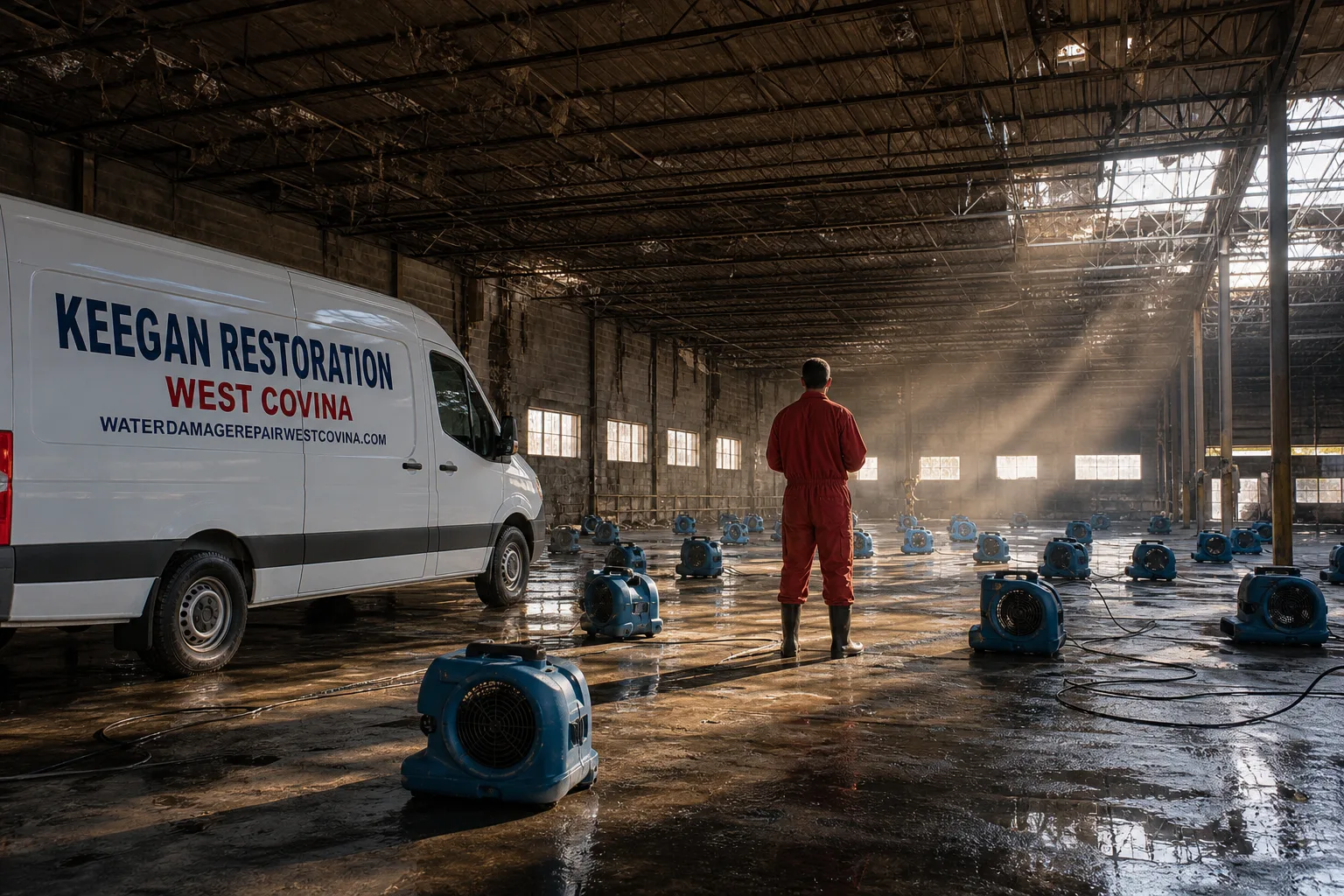
 Fire & smoke cleanup
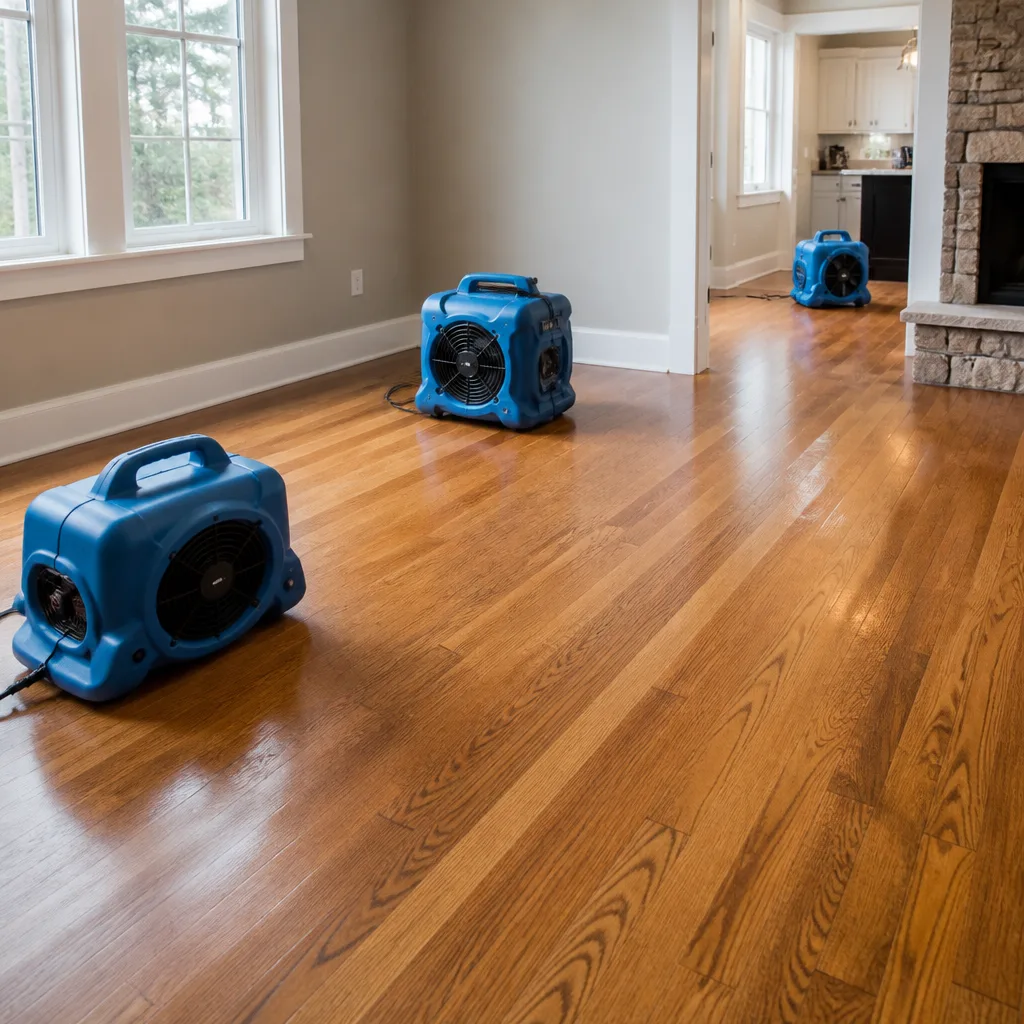 Water damage drying
 Mold remediation
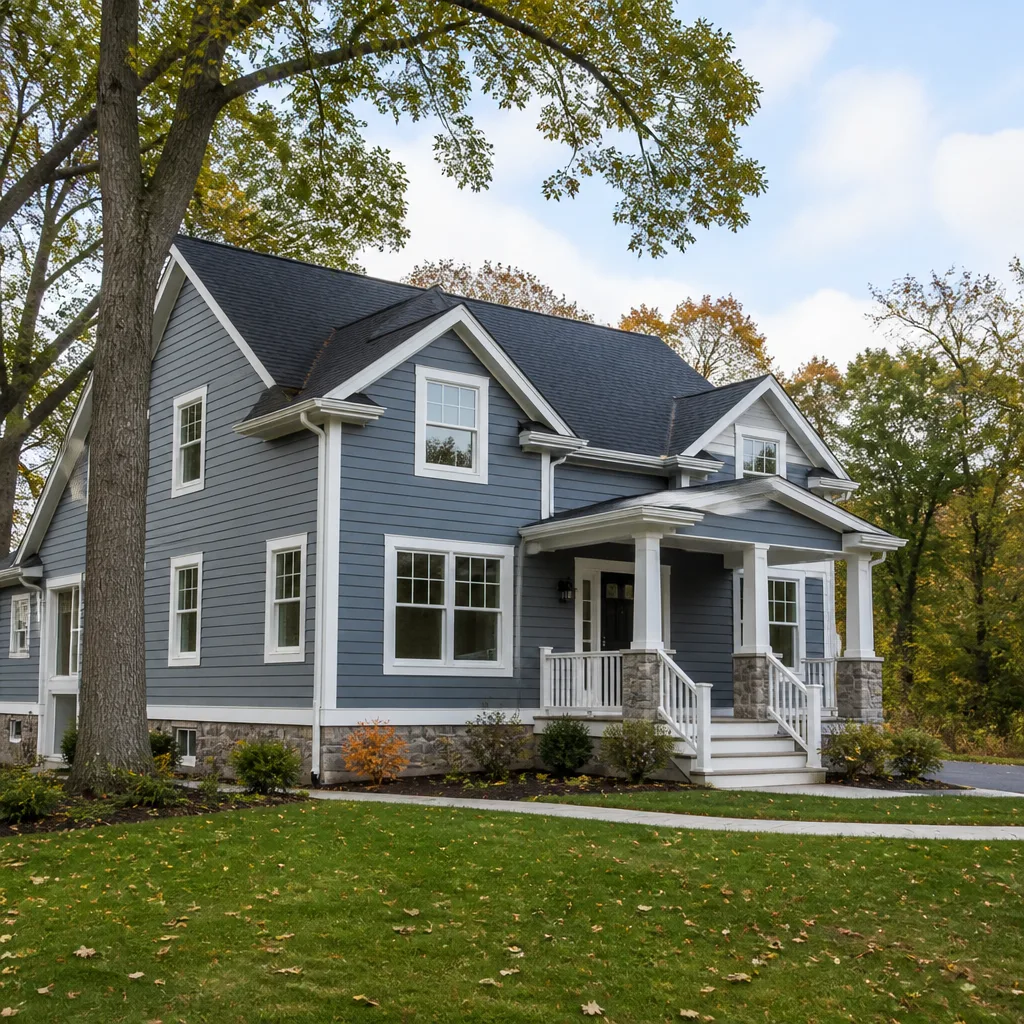 Storm response
 Sewage cleanup
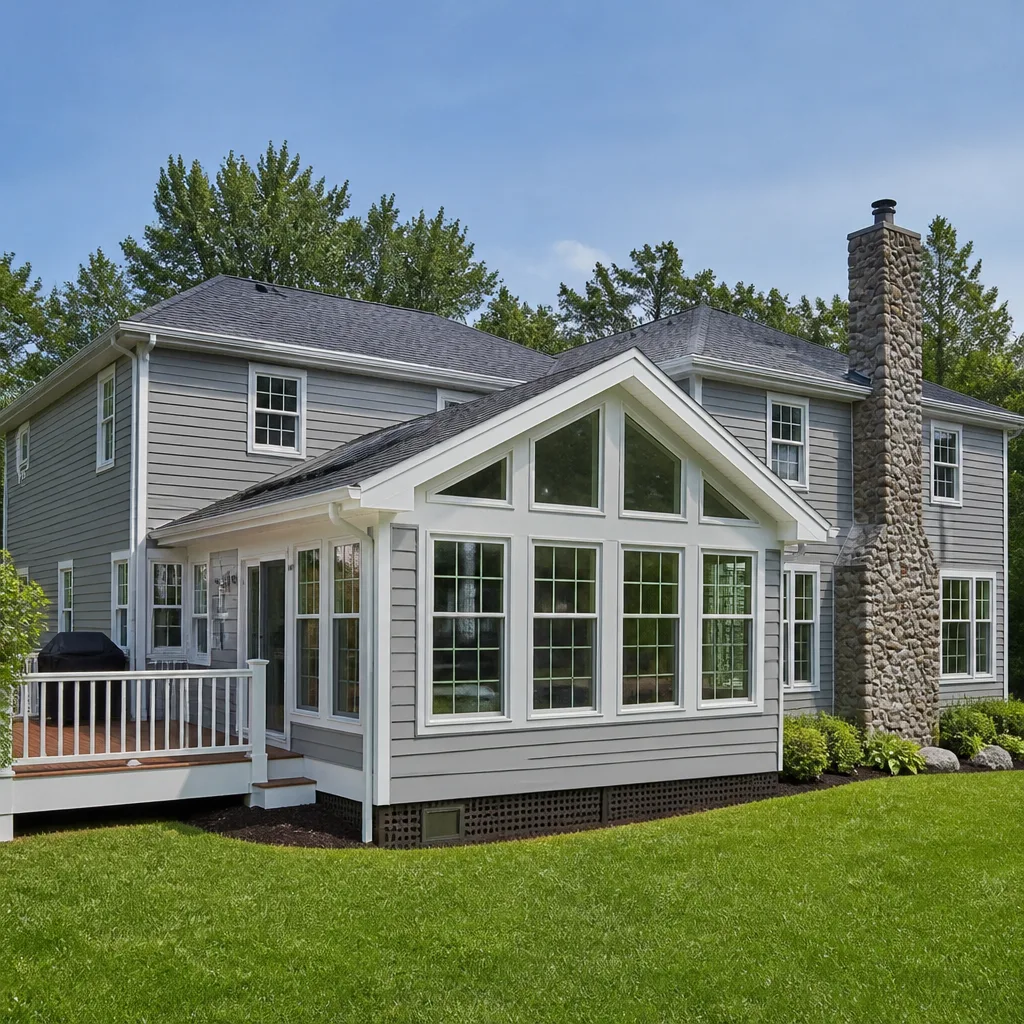 Reconstruction
Free visual inspection and a written scope of work before any mitigation begins - photos, moisture readings, and drying logs go in your claim file
The scope we write is the scope we bill. Anything new gets shown to you, in writing, before we touch it.
Get your free estimateRestoration work we handle
See the difference
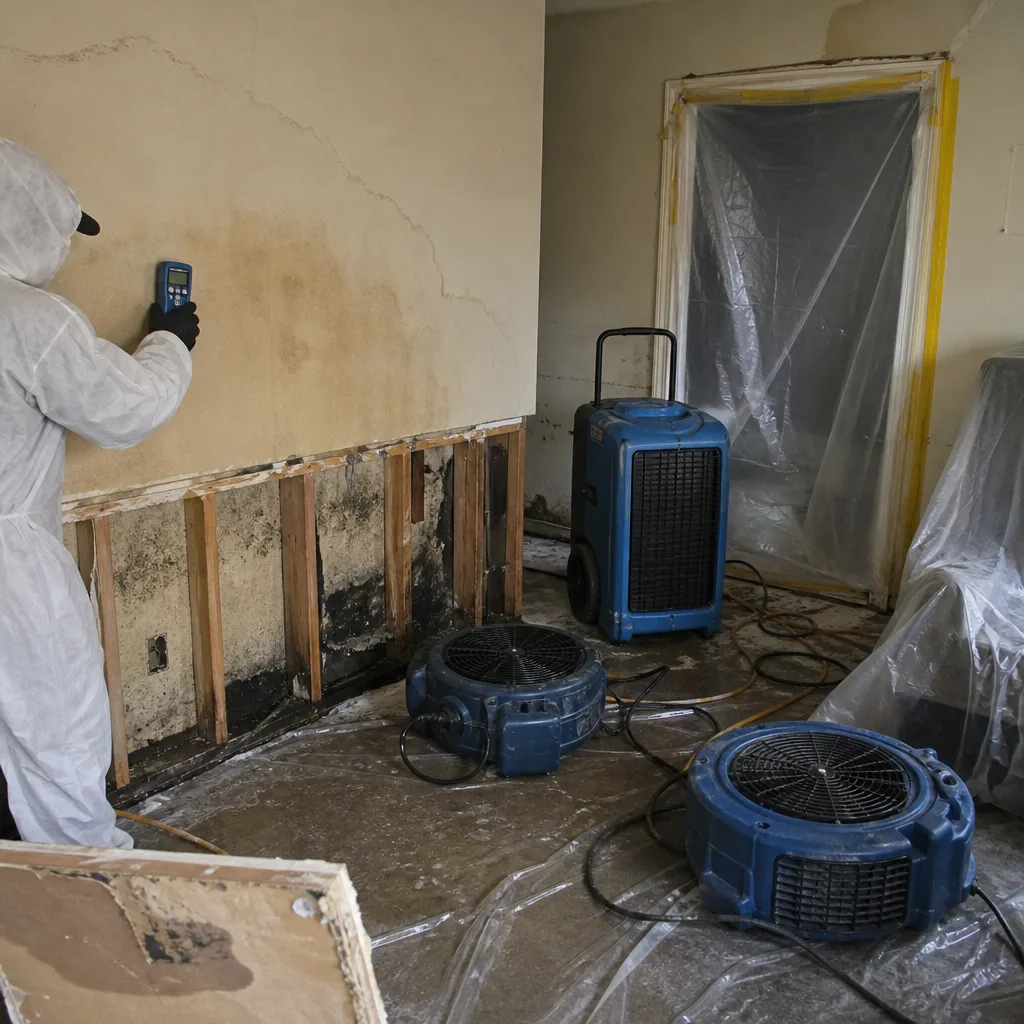 Before
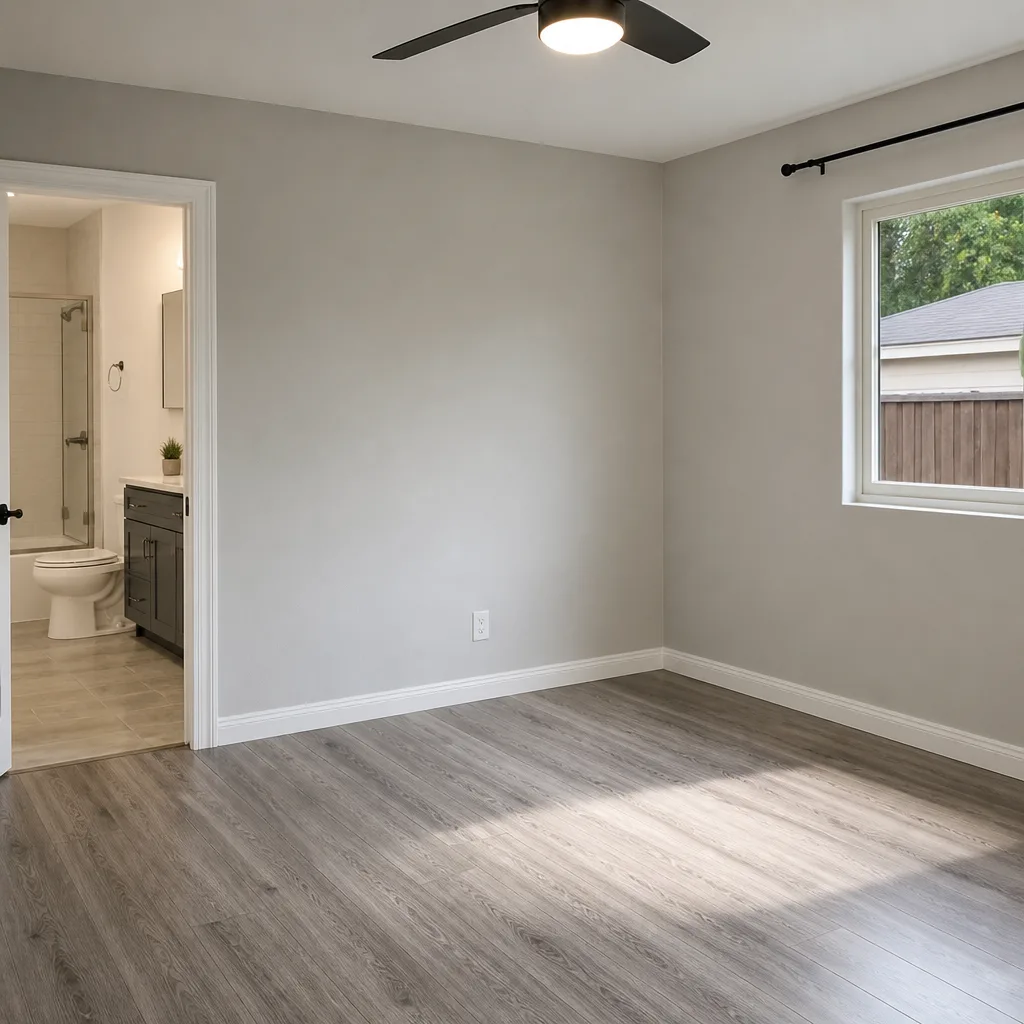 After
After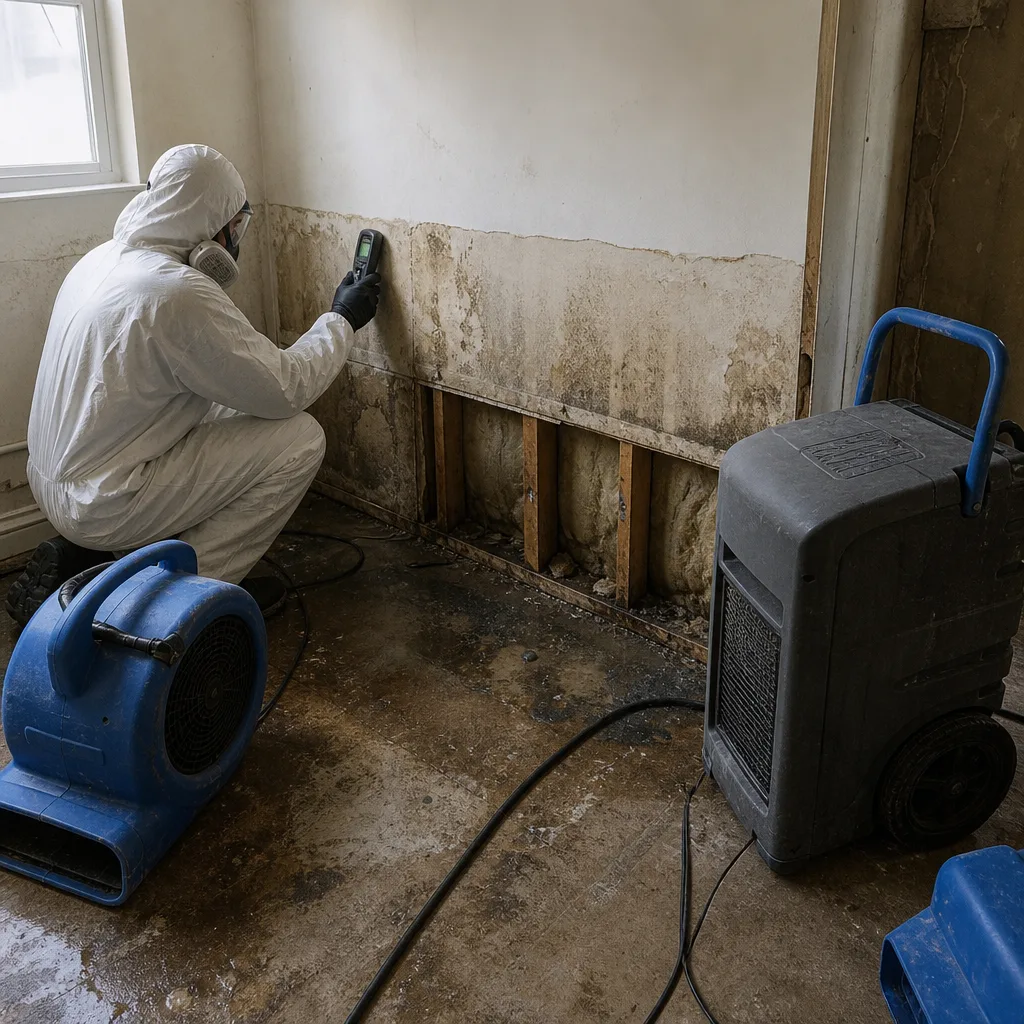 Before
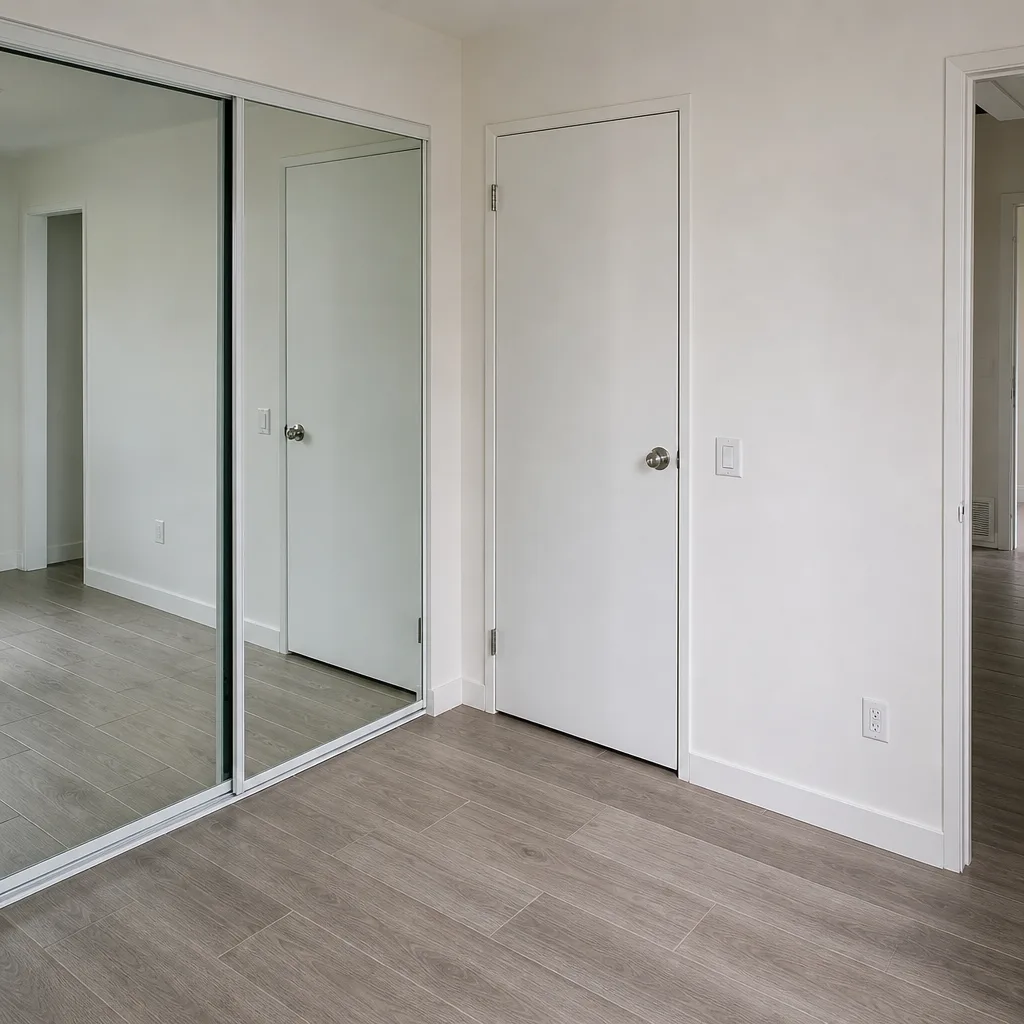 After
After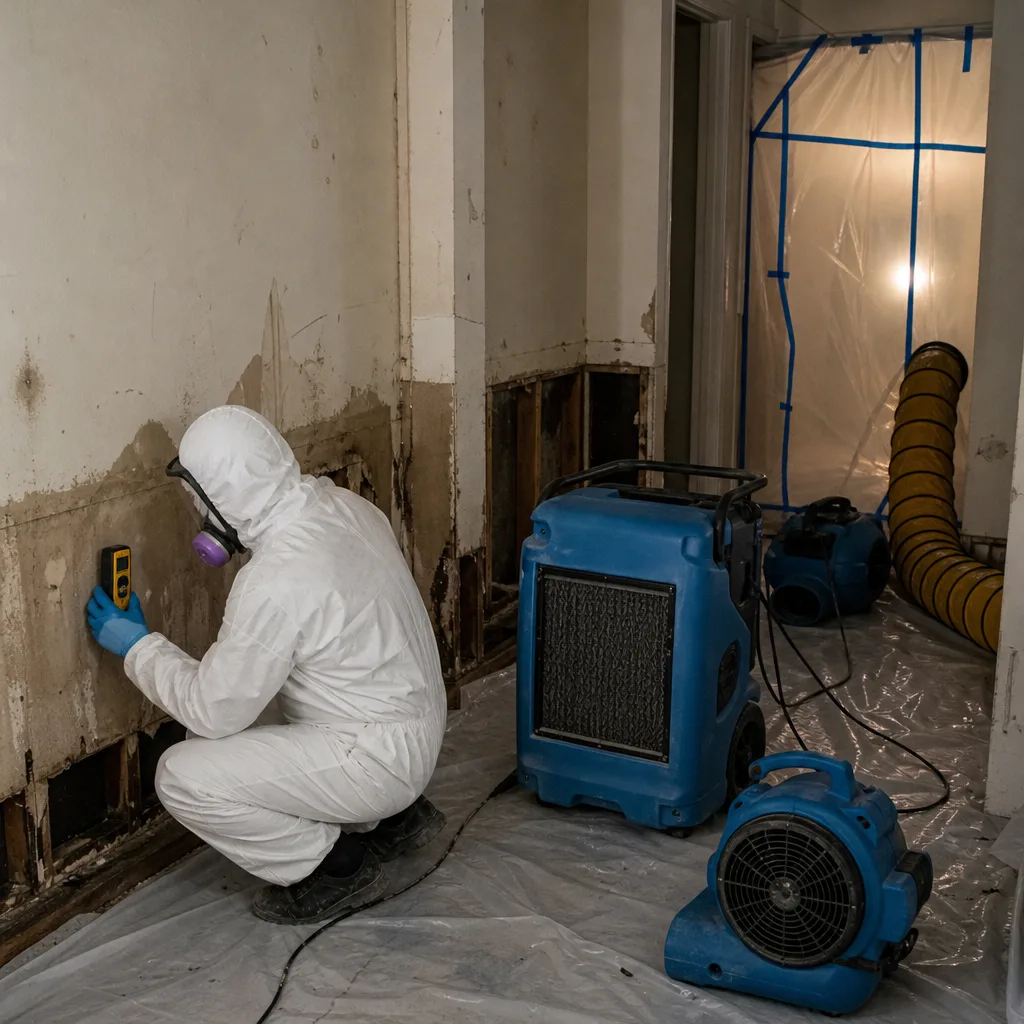 Before
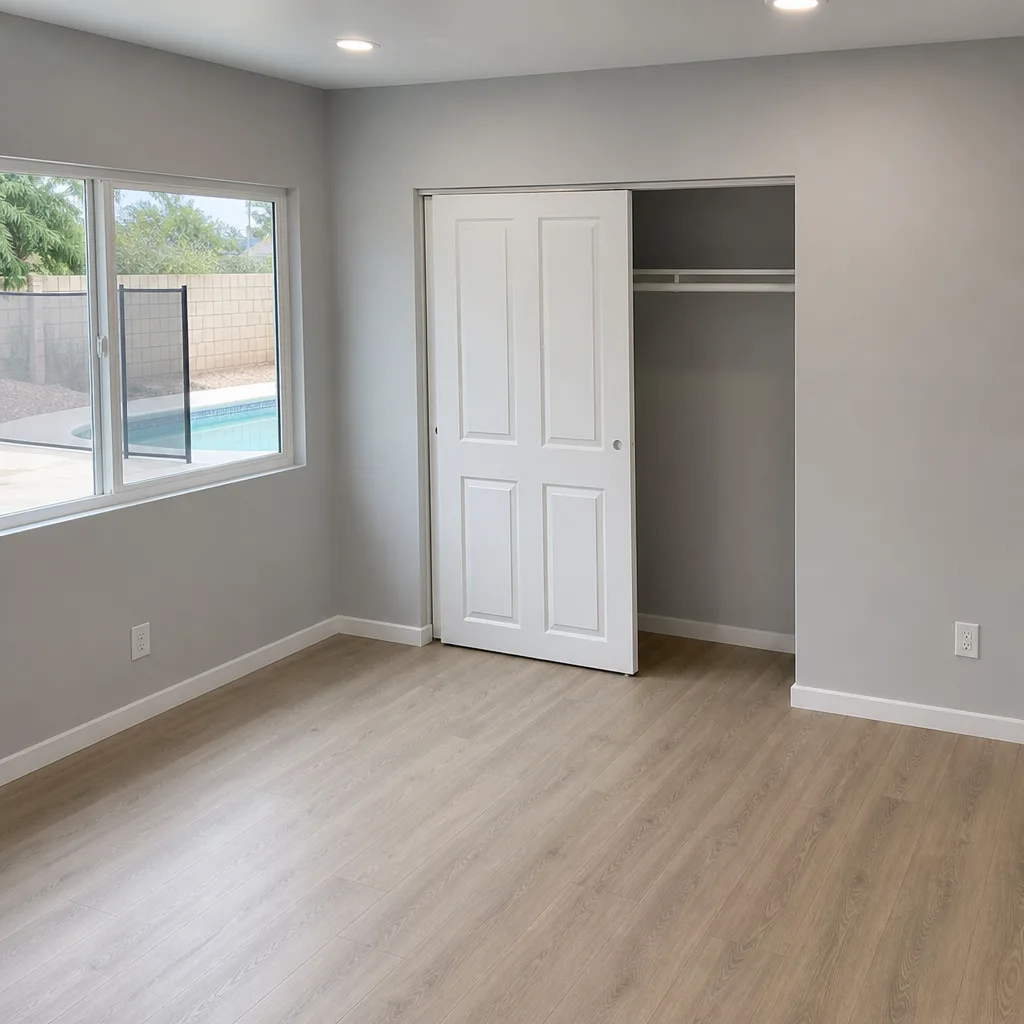 After
AfterHow Much Does Fire & Smoke Damage Restoration Cost in West Covina?
Fire and smoke damage restoration in West Covina typically runs between $3,200 and $12,500 for a standard single-family home, with most homeowners paying around $7,800. Small contained fires (a kitchen grease fire, an electrical outlet burn) often land in the $2,500 to $5,000 range, while whole-house smoke infiltration and structural fire repairs can push past $25,000. These numbers reflect what we actually see on jobs across West Covina neighborhoods like South Hills, Woodside, and the Ridges in 2026, not national averages that ignore the San Gabriel Valley market.
Key Takeaways:
- West Covina fire restoration pricing runs roughly $3,200 to $12,500 for most jobs; partial kitchen or single-room fires start near $2,500.
- Smoke-only damage (no structural fire) is cheaper, usually $1,800 to $4,000, but soot from synthetic materials gets into drywall and HVAC ducting fast.
- Water damage from firefighting nearly always adds $1,200 to $4,000 to the total bill.
- Insurance typically covers 80 to 100 percent of restoration costs after your deductible; we document every line item in a format adjusters recognize.
- You’ll get a written price from Keegan Restoration West Covina before any work starts. That number doesn’t move at the door.
Fire & Smoke Damage Restoration Cost Breakdown (2026)
Here’s the line-item breakdown we walk homeowners through in West Covina. These are real ranges from jobs we’ve scoped in this market over the last 12 months. Your exact numbers will shift based on square footage, the materials that burned, and how long the soot sat before mitigation started.
| Line Item | Typical Range (West Covina, 2026) | Notes |
|---|---|---|
| Emergency board-up & tarping | $400 – $1,200 | Secures openings after fire department leaves; often required before adjuster visit |
| Water extraction & structural drying | $1,200 – $4,000 | Firefighting water soaks subfloor, drywall, and framing; needs Dri-Eaz or Phoenix drying equipment |
| Soot & smoke residue cleaning | $1,800 – $5,500 | Includes dry sponge cleaning, HEPA vacuuming, and thermal fogging; pricing scales with affected square footage |
| Odor removal & deodorization | $800 – $2,800 | Ozone treatment, hydroxyl generators, or thermal fogging depending on smoke type |
| Duct & HVAC cleaning | $500 – $1,800 | Soot travels through return air; most fire jobs require at least partial duct service |
| Contents cleaning & pack-out | $1,500 – $6,000 | Soft goods, upholstery, and porous items cleaned off-site; range depends on volume |
| Drywall & insulation replacement | $900 – $3,500 | Charred or smoke-saturated drywall can’t be salvaged; this is the most common structural repair |
| Paint & finish restoration | $600 – $2,200 | Sealing and repainting after odor remediation to lock in treated surfaces |
What shifts these numbers in West Covina specifically? Three things move the needle more than anything else. First, the age of the home matters. A lot of the housing stock south of the 10 freeway dates to the 1950s and 60s. Older framing, lathe-and-plaster walls, and outdated electrical add hours to every phase of the job. Second, the smoke type. Synthetic materials (carpet, upholstery, laminate flooring) burn hotter and leave a sticky, penetrating soot that’s harder to remove than natural-material smoke from wood or paper. Third, response time. Soot starts etching into glass, stone, and metal finishes within 72 hours. The faster mitigation begins, the less surface restoration you’re paying for.
One thing to understand: the water used to put out the fire is often the most under-scoped line item on the estimate. A kitchen fire that looks small on the surface can soak the subfloor across 400 square feet. That’s why we run psychrometrics on every job, measuring moisture content in the air and materials, not just visually inspecting. It catches hidden saturation before mold gets a foothold in West Covina’s warm, semi-arid climate where dried-out framing drinks water fast.
What Affects Fire & Smoke Damage Restoration Pricing in West Covina
- Square footage of affected area, not total home size. A 1,400 sq ft home with fire contained to one bedroom is a $4,000 job. The same home with smoke migration through the whole second floor is $10,000 plus. Smoke follows air currents, and West Covina’s ridge-side homes along the north edge of the city see more wind-driven smoke spread than sheltered lots in the flats.
- Type of materials burned. Natural wood and paper smoke is dry, loose, and relatively easy to clean. Synthetic smoke from vinyl flooring, polyester carpet, or foam cushions is oily, sticky, and acidic. It corrodes metal fixtures within days and requires aggressive chemical cleaning.
- Water saturation from firefighting. The fire department doesn’t trickle water on a fire. They flood it. Water pools in wall cavities, wicks up drywall, and saturates insulation. This often means demolition and replacement, not just drying. On multi-story homes in the Ridges, water travels down through floor cavities and damages ceilings on lower floors.
- HVAC system involvement. If the system was running during the fire, soot and smoke particles got pulled through the return ducts and distributed. Duct cleaning adds $500 to $1,800, but replacing a contaminated air handler can add $3,000 or more.
- Contents volume and type. More furniture, clothing, and stored items in the affected rooms means more pack-out labor, more off-site cleaning, and more storage cost. Homes in Walnut-adjacent West Covina neighborhoods with larger floor plans tend to have more contents per room.
- Access and structural complexity. Second-story fires, cathedral ceilings, tight attic spaces, and older electrical panels all slow down the work. Labor hours are the single largest cost driver in fire restoration, so anything that makes the job take longer costs more.
Insurance and Fire Damage Restoration Pricing
Most West Covina homeowners file a fire claim through their homeowner’s insurance. Your policy typically covers fire and smoke restoration under dwelling coverage, minus your deductible. Deductibles in this market commonly run $1,000 to $2,500, though some policies carry 1 percent of dwelling coverage on larger homes.
Here’s what matters for your out-of-pocket cost: the scope of loss documentation. Insurance adjusters approve line items based on evidence. When mitigation is documented properly, with moisture readings, photo logs, and itemized materials, claims get approved faster and with less back-and-forth. We format every job file to match what adjusters and third-party reviewers expect. That means daily photo documentation, written moisture logs from start to finish, and line-item invoices that map directly to IICRC standards.
If your policy has a “matching” provision for flooring or cabinetry, the adjuster may cover replacement beyond the damaged area to maintain consistency. This is especially common in newer South Hills and Galster Wilderness-adjacent homes with continuous flooring layouts. We’ll point these items out in the scope so you’re not leaving claim dollars on the table.
Shane Pruitt, who leads Keegan Restoration West Covina, has walked enough fire jobs in this city to know which line items adjusters question and which ones they approve without hesitation. The difference is documentation. We don’t ask you to fight your claim. We hand you a file that stands on its own.
Fire Damage Restoration Timeline and Cost Impact
Speed matters for two reasons: your health and your final bill. Soot, especially from synthetic materials, contains polycyclic aromatic hydrocarbons that irritate eyes, throat, and lungs. And the longer acidic soot sits on surfaces, the more permanently it etches them. Glass and ceramic can be salvaged within a week. After two weeks, you’re often replacing them.
The typical West Covina job runs like this:
- Emergency response and board-up (hours 1 to 4 after the fire). Board-up and tarping usually runs $400 to $1,200. This protects the home from weather, animals, and unauthorized entry. West Covina gets enough summer heat to bake soot into surfaces if windows are left open, so sealing the envelope quickly matters.
- Water extraction and setup of drying equipment (day 1 to 2). We bring in Dri-Eaz and Phoenix air movers and dehumidifiers to pull firefighting water out of the structure. This phase usually takes 2 to 4 days and costs $1,200 to $4,000 including equipment and labor.
- Soot and residue cleaning (days 2 through 7). Technicians clean every affected surface, including walls, ceilings, cabinets, fixtures, and framing. The cleaning methods vary by surface and smoke type. Cost: $1,800 to $5,500.
- Odor removal and thermal fogging (days 5 through 9). Deodorization uses hydroxyl generators or ozone to neutralize odor molecules in the air and in porous surfaces. Cost: $800 to $2,800.
- Structural repair and reconstruction (days 7 through 21). Drywall replacement, insulation swap, paint, and finish work bring the home back to pre-loss condition. This is typically $1,500 to $5,000 depending on the extent of demo.
- Final inspection and documentation handoff (day 20 to 25). You receive the full file: photos, moisture readings, invoices, and warranty documentation. This file is your claim support.
Total elapsed time for a typical single-room fire with smoke spread: 3 to 4 weeks. Whole-home smoke jobs with contents pack-out run 6 to 8 weeks. The labor intensity of cleaning is what drives cost, not the calendar time itself. Every day of labor is in the written price before we start.
How to Save on Fire & Smoke Damage Restoration
Fire restoration isn’t a place to hunt for the lowest bid, but there are legitimate ways to keep your final bill down without cutting corners:
- Call early. Soot that sits for a week becomes a bigger problem than soot that gets addressed in 48 hours. Faster response means cheaper cleaning and fewer replaced materials. Keegan Restoration West Covina answers the phone 24/7 with a live person. No call-back queues.
- Don’t pre-clean the walls yourself. It’s common for homeowners to scrub smoke residue with household cleaners, but this often pushes soot deeper into painted surfaces and drywall, making professional removal harder and more expensive. The wrong cleaner on a smoked wall can set the stain permanently. Let the pros handle the chemical work.
- Rely on your insurance documentation. A poorly documented claim leaves line items rejected and the homeowner paying out of pocket. We format every job to support your claim, which means fewer denied items and less back-and-forth with the adjuster.
- Ask about the warranty upfront. Our 365-Day Done Right Promise is in writing before the job starts. If a repair fails within one year, we come back at no charge. That’s not an upsell, it’s the standard we run every job to. A failed paint seal or returning odor months later is covered, period.
- Get the scope in writing before you sign. If a contractor won’t put the price in writing before work starts, walk away. The Garrison Standard exists because too many restoration contractors in the San Gabriel Valley move prices at the door. Our price is written, fixed, and delivered before the first tool comes off the truck.
Want a written estimate for your specific situation? Call (559) 249-4798. The estimate costs you nothing, and it gives you a real number to work with whether or not you hire us.
Fire & Smoke Damage Restoration in West Covina: What the Job Actually Involves
If you’ve never been through a fire, the process is unfamiliar and the terminology is dense. Here’s the plain-language version of what a proper restoration looks like, so you can evaluate any contractor’s scope with confidence.
Emergency board-up. The fire department may open walls, break windows, and remove vents to check for extension. A restoration crew secures those openings with plywood and plastic sheeting. This is step one and it happens within hours of the fire being extinguished.
Water extraction and drying. Firefighting water is rarely accounted for on initial estimates. We use moisture meters and thermal imaging to find saturated areas, then run professional-grade extraction and drying equipment from Dri-Eaz, Phoenix, XPOWER, and B-Air. The term “psychrometrics” just means we measure the air and materials to know when drying is actually complete, not just when it looks dry.
Soot removal. The type of cleaning depends on the type of smoke. Dry smoke from wood and paper can often be dry-sponged and HEPA-vacuumed. Wet smoke from synthetic materials needs chemical cleaning because the residue is oily and bonds to surfaces. We identify which smoke type you’re dealing with before choosing the method.
Odor neutralization. Smoke odor lives in porous materials: drywall, insulation, carpet pad, upholstery, and even studs. Surface cleaning alone won’t get it out. We use hydroxyl generators and thermal fogging to neutralize odor molecules inside the materials themselves, not just mask them with fragrance.
Contents handling. Porous items like clothes, bedding, and soft furniture may need off-site cleaning. Non-restorable items get documented for insurance. The scope includes a room-by-room inventory with photographs, which doubles as your claims documentation.
Structural repair. Charred studs come out. Smoke-damaged drywall comes out. Insulation gets replaced. The space gets sealed, primed with odor-blocking primer, and repainted. This phase is where the “restoration” part of fire restoration gets done.
Every phase is documented. Every dollar is accounted for in the written estimate. You never sign a blank check with Keegan Restoration West Covina.
Fire & Smoke Damage Restoration for West Covina Homes: Local Considerations
West Covina has its own restoration profile. The city spreads from the 10 freeway corridor up into the hills north of Cameron Park, and the housing reflects that geography. Post-war ranch homes dominate the southern and central areas. Larger two-story builds sit in neighborhoods like the Ridges and South Hills. Each housing type burns and spreads smoke differently.
Ranch homes with central hallways push smoke quickly into bedrooms and common areas because air flows straight through the core of the house. Two-story homes trap smoke upstairs, where it infiltrates open attic space and spreads through truss cavities. We routinely find smoke damage in rooms that were never touched by flame, simply because the HVAC system or open stairwell distributed it.
West Covina’s climate also matters. Summer temperatures routinely climb into the 90s, and that heat accelerates the chemical reactions that set soot into paint and finishes. If a fire happens in July, the window for surface salvage is shorter than if it happens in January. This is a real factor in how aggressive we are with the cleaning schedule.
Building permits can also affect your timeline and budget. Structural repairs like drywall replacement and electrical work in West Covina require city permits, which add filing fees and inspection wait times. A contractor who skips permits saves you money in the short term and hands you a liability later. We pull permits when the scope requires them. The cost is in the estimate up front.
FAQs – Fire & Smoke Damage Restoration Cost
Is it cheaper to repair fire damage or replace the whole house?
Repairing is almost always cheaper. Even a heavy fire damage restoration in West Covina that runs $25,000 to $40,000 is a fraction of the $300,000 to $500,000 it costs to rebuild a typical 1,500 to 2,000 square foot home from the ground up. Replacement usually only makes sense when structural damage exceeds roughly 60 percent of the home’s value, which is legally significant because California building codes require full code-compliance upgrades when a structure is rebuilt beyond a certain threshold. Every West Covina fire we’ve scoped in 2026 made more financial sense to restore than replace. Call (559) 249-4798 and we’ll give you the straight numbers on your specific damage.
How much does smoke damage removal cost for a kitchen fire in West Covina?
A typical kitchen fire with smoke spread through the main floor of a West Covina home runs $2,800 to $6,500. That includes soot cleaning on cabinets, walls, and ceilings, plus odor treatment and duct cleaning if the HVAC pulled smoke through the system. If the cabinets themselves are charred and need replacement, the total jumps to $8,000 to $14,000. The gap comes down to whether you’re cleaning surfaces or replacing them. Call us at (559) 249-4798 for an exact scope and written price.
Does homeowner’s insurance cover fire and smoke damage restoration?
Yes, standard homeowner’s insurance policies cover fire and smoke damage under dwelling coverage, typically paying $2,500 to $25,000 or more depending on the scope and your policy limits. You’re responsible for your deductible, which usually ranges from $1,000 to $2,500 in West Covina. What determines whether the claim pays out smoothly is documentation. We provide photo logs, moisture readings, equipment records, and line-item invoices formatted to support your claim, so the adjuster sees the full scope from day one.
Can you come today for fire damage restoration in West Covina?
Yes. A live person answers our phone 24 hours a day, 7 days a week, including nights, weekends, and holidays. When you call (559) 249-4798, you’ll speak with a person who can dispatch a crew to your West Covina home the same day. Board-up and water extraction start immediately, which protects the home and starts moving the soot clock in your favor. Every hour of delay means deeper soot penetration and more surface replacement later.
How much does it cost to get smoke smell out of a house?
Standalone smoke odor removal for a West Covina home that doesn’t need structural repairs typically runs $1,800 to $4,800. The price depends on the affected square footage and whether the HVAC system needs treatment. We use hydroxyl generators and thermal fogging to neutralize odor molecules rather than masking them, and the job is backed by our 365-Day Done Right Promise in writing. If the odor comes back within a year, we return and treat it again at no charge. Call (559) 249-4798 for a written estimate.
Does smoke damage need to be professionally cleaned or can I do it myself?
For anything beyond a tiny, contained burn like a single pot on the stove, professional cleaning is the safer and cheaper choice in the long run. Smoke residue from a genuine fire contains fine particulates and chemical byproducts that household cleaners won’t remove from porous surfaces. Improper cleaning pushes soot deeper into drywall and paint, and DIY odor treatments almost always fail because they can’t reach odor trapped in wall cavities, insulation, and ducting. We recommend professional remediation for any fire that produced visible soot beyond the appliance itself.
Get a Written Fire & Smoke Damage Restoration Estimate
Fire damage doesn’t wait, and neither should your estimate. The cost of fire and smoke restoration in West Covina ranges widely because every fire is different. What shouldn’t vary is the integrity of the contractor you hire. Keegan Restoration West Covina runs every job to The Garrison Standard: show up inside the window, put the price in writing before any work starts, use professional-grade equipment from Dri-Eaz, Phoenix, XPOWER, B-Air, and Injectidry, document everything to support your insurance claim, and stand behind the work for a full year.
Shane Pruitt and his team know West Covina’s housing stock, its permit process, and its insurance landscape. When you call, you get a live person who can dispatch same-day. You get a written price. You get a one-year guarantee. Call (559) 249-4798 now for your free estimate.
For more on our fire restoration process and what to expect from start to finish, see our Fire & Smoke Damage Restoration in West Covina service page. And if you’re just starting your research, visit our home page for an overview of our water, fire, and mold remediation services.
Pricing reflects the West Covina market as of 2026. Keegan Restoration West Covina offers free estimates – call (559) 249-4798.
Written by Shane Pruitt, Owner at Keegan Restoration West Covina, serving West Covina since 2005.
What Our Customers Say
"Basement water from a bad sump pump. Extracted, dried, and treated for mold. The smell is gone."
- Perry J."Water heater burst in the garage and flooded the hall. Crew was there fast, in uniform, set up dehumidifiers and air movers, and ran drying logs every day. Veteran-owned and organized."
- Gail S."Fire damage in the kitchen from a stove flare-up. They cleaned the soot, removed the burnt cabinets, and deodorized the house."
- Lorraine D.