
Last updated October 16, 2026
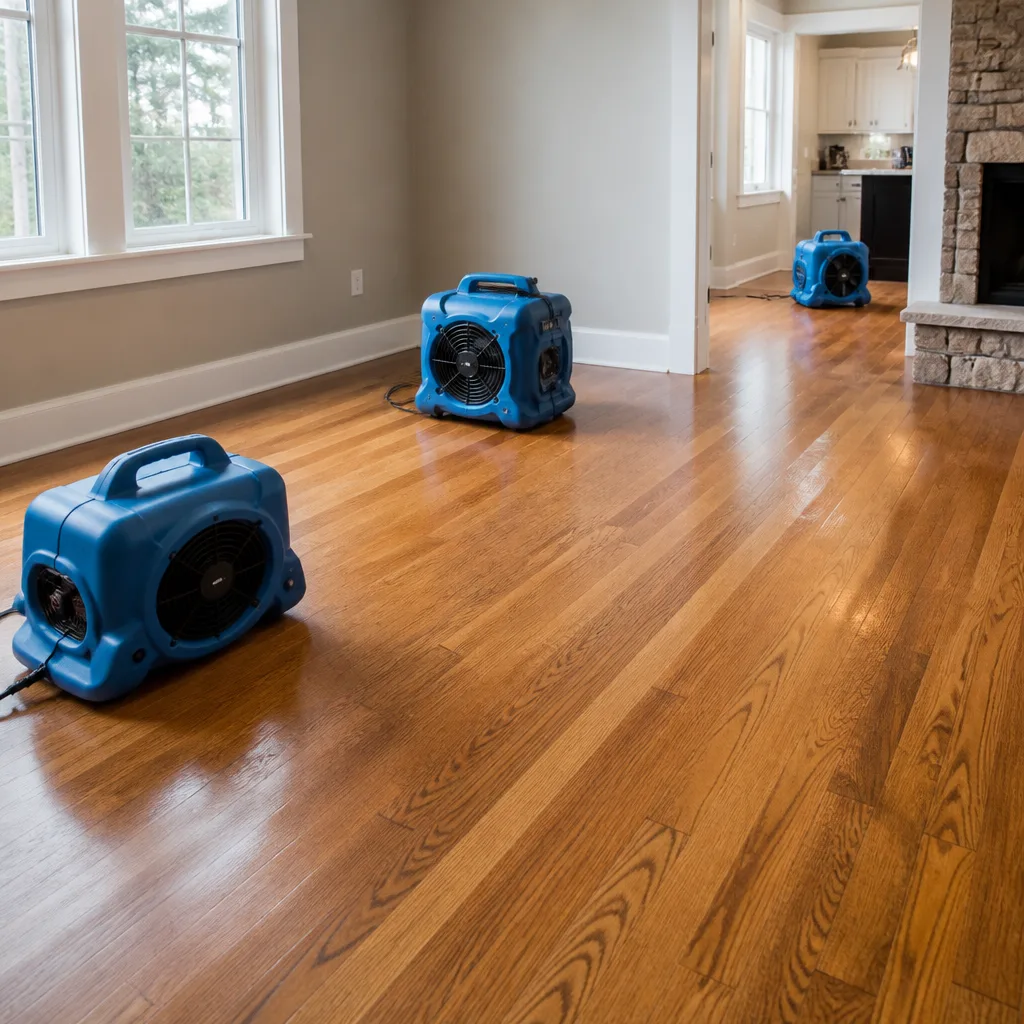 Water damage drying
 Fire & smoke cleanup
 Mold remediation
 Storm response
 Sewage cleanup
 Reconstruction
Free visual inspection and a written scope of work before any mitigation begins - photos, moisture readings, and drying logs go in your claim file
The scope we write is the scope we bill. Anything new gets shown to you, in writing, before we touch it.
Get your free estimateDamage Restoration Cost Breakdown: The West Covina Homeowner’s Reference for 2026
Most West Covina homeowners get their first restoration estimate while standing in a flooded living room at 2 a.m., stressed and exhausted, talking to a crew they’ve never met. That first number you hear over the phone or at the door is almost never the number you’ll pay. In fact, the single biggest factor separating a fair restoration price from a padded one in West Covina isn’t the size of the job. It’s how the contractor structures the estimate. This guide will walk you through the actual line items, show you what reasonable 2026 pricing looks like for water, fire, and mold work in West Covina, and teach you how to read an estimate so you can tell the difference between honest trade pricing and bait designed to move up once the crew is inside. For Damage Restoration Warning Signs: A West Covina Homeowner’s Reference Guide, see our companion post.
Quick Answer
Water damage restoration in West Covina runs $2,500 to $8,500 for typical single-room incidents, mold remediation runs $1,800 to $6,000 per affected area, fire and smoke cleanup runs $3,500 to $15,000, and structural reconstruction runs $40 to $90 per square foot. The cost difference between two identical West Covina jobs is almost never about the damage. It’s about whether the contractor wrote a line-item price before starting or gave a verbal estimate that will grow once the equipment comes off the truck.
Restoration work we handle
Table of Contents
- What Water Damage Restoration Costs in West Covina in 2026
- Mold Remediation Cost Ranges for West Covina Homes
- Fire and Smoke Damage: What the Cleanup and Rebuild Really Cost
- How to Read a Restoration Line-Item Estimate
- Emergency Response Rates vs. Standard Rates, and When Each Is Warranted
- Insurance Direct Billing and Assignment of Benefits: What You’re Actually Signing
- Why the Written Price Before Work Starts Controls Your Final Cost More Than Anything Else
- Reconstruction Costs in West Covina: What Rebuilding Actually Runs Per Square Foot
What Water Damage Restoration Costs in West Covina in 2026
Water damage restoration in West Covina runs from $2,500 to $8,500 for a typical single-room incident like a burst supply line, a failed water heater, or an overflowing bathtub that soaked into flooring and drywall. A whole-home event, like a slab leak that ran for days or a second-floor bathroom flood that dropped water through the ceiling into the first floor, falls in the $9,000 to $25,000 range. Those numbers are for extraction, drying, and repair back to a sound surface, not cosmetic finishing.
Here’s what that money actually buys, line by line:
- Emergency extraction ($350 to $800 per room): truck-mounted or portable extraction to remove standing water before it migrates further. In West Covina’s dry, warm climate, evaporation happens fast, but so does wicking: water moves upward through drywall and outward through baseboards within hours if the extraction is delayed. A proper extraction uses professional-grade equipment, including truck-mounted units and extractor wands, not a wet-dry vacuum.
- Structural drying ($800 to $2,500): air movers and dehumidifiers placed using psychrometrics, the science of measuring moisture in air and materials, rather than guesswork. Equipment runs 3 to 7 days, and the power draw alone can add $150 to $400 to your electricity bill if the contractor uses high-amperage units, which is one reason professional-grade drying equipment matters. Brands like Phoenix and Dri-Eaz dry faster at lower amp draw than rental units.
- Demolition and disposal ($400 to $1,500 per room): cutting flood-soaked drywall at the water line, pulling wet insulation, and bagging it for transport. West Covina requires disposal of contaminated materials through permitted haulers, and that cost is almost always passed through as a line item.
- Antimicrobial and odor treatment ($250 to $700): treating framing and subfloor with registered antimicrobial products after drying to prevent mold growth before reconstruction. This is not the same as mold remediation, and a legitimate contractor will say so.
- Repair and reconstruction ($900 to $3,500 per room): drywall patch, texture match, baseboard replacement, and paint. Texture matching in older West Covina homes, especially the orange-peel and knockdown patterns common in 1960s and 1970s tracts near the West Covina Marketplace, takes more labor and often means blending a whole wall instead of a patch.
The cost-per-square-foot number you’ll hear thrown around is $3.50 to $7.50 for the full scope of water restoration work, but that’s a planning number, not a bid. A single room costs more per square foot than a whole house because the fixed costs of mobilization, equipment transport, and setup are spread over less area. If you want the full breakdown of how Water Damage Restoration in West Covina works from dispatch to final walkthrough, start with the scope of loss, not the square footage.
Mold Remediation Cost Ranges for West Covina Homes
Mold remediation in West Covina runs $1,800 to $6,000 per affected area in 2026, with whole-house projects, especially after long-running hidden leaks in wall cavities, reaching $12,000 to $20,000. The wide range reflects something most homeowners don’t realize: mold is almost always a symptom of a water problem, and part of remediation is fixing the moisture source, which is often a plumbing or drainage repair that isn’t part of the mold line item itself.
What you’ll see on a proper mold remediation estimate:
- Containment ($400 to $1,200): 6-mil plastic sheeting and negative air pressure to isolate the affected area so spores don’t spread through the home during removal. A legitimate remediator never skips this, even for small jobs. If a contractor quotes you mold removal without containment in West Covina, walk away from that number.
- HEPA filtering ($300 to $900): air scrubbers run during and after removal to capture airborne spores. These are standard on IICRC-compliant jobs and should be itemized.
- Source removal ($800 to $2,500 per affected wall or ceiling): cutting out mold-affected drywall and insulation, bagging it under containment, and disposing of it through permitted channels. Surface wiping without removal is a cosmetic fix that fails, and the industry’s own reference standards treat porous-material removal as the default.
- Structural treatment and sealant ($300 to $800): treating framing with antimicrobial products and, in some cases, encapsulant primer after drying is verified with moisture meters.
- Moisture source repair (variable, often $500 to $3,000): the plumbing leak, roof penetration, or drainage issue that caused the mold in the first place. If this isn’t addressed in the scope, the mold comes back, and no honest contractor will pretend otherwise in West Covina’s warm, occasionally humid spring and fall season, when moisture in wall cavities lingers longer than it does in coastal air.
For the full walkthrough of how remediation is done to a written standard in West Covina, see Mold Remediation in West Covina. The same documentation discipline applies: every phase is recorded and formatted to support your insurance claim if the loss is covered.
Fire and Smoke Damage: What the Cleanup and Rebuild Really Cost
Fire damage restoration in West Covina runs $3,500 to $15,000 for cleanup and structural repair on a contained kitchen fire or garage fire, and $25,000 to $80,000 or more for a fire that compromised framing, windows, or roof structure. Smoke damage alone, with no fire, typically runs $1,200 to $4,000 for affected rooms. These numbers include board-up, demolition, cleaning, sealing, and reconstruction to a finished surface.
Here’s how fire restoration costs break down in the West Covina market:
- Board-up and tarping ($500 to $1,500): securing the structure immediately after the fire department releases the scene. This is a required first step, not an upsell. West Covina’s fire marshal and building department expect the structure secured before any other work proceeds, and permitting for reconstruction begins with a secured site.
- Debris removal and demolition ($1,000 to $5,000): removing charred drywall, insulation, and framing material down to sound structure. Smoke penetrates porous materials far beyond the visible burn area, so demolition often extends two to four feet beyond the char line.
- Soot and smoke cleaning ($800 to $3,000): dry-ice blasting, soda blasting, or wet cleaning of studs and non-porous surfaces, plus specialized cleaning of HVAC ducts if smoke entered the system. This line item is the most under-scoped item on fire jobs. Smoke residue is acidic and will continue to damage metal and wood for weeks if not neutralized.
- Sealing and odor treatment ($400 to $1,500): encapsulating affected framing with a smoke-sealing primer after cleaning, which is the only reliable way to stop residual odor from returning.
- Reconstruction ($40 to $90 per square foot): framing repair, insulation replacement, drywall, texture, paint, and finish carpentry. See the reconstruction section below for the full picture.
For a detailed walkthrough of the process, including what to expect from the first 72 hours after a fire in West Covina, see Fire Damage Restoration in West Covina. The short version: it’s a sequence of secured site, documented scope, written price, executed work, and a written guarantee behind the whole thing.
How to Read a Restoration Line-Item Estimate
A restoration estimate is either itemized or it’s not an estimate, it’s a number. In West Covina, where a 1,400-square-foot 1970s-era ranch and a 3,200-square-foot 2005 two-story in the hills near Walnut Creek have entirely different framing and finish costs, a single lump-sum number tells you almost nothing. Here’s how to read the line items and know which ones are legitimate:
- Mobilization. This is the cost of getting a crew and equipment to your home. It’s legitimate and typically runs $150 to $400. If you see it on an estimate for a scheduled job, it’s normal. If a contractor tells you there’s no mobilization fee and then adds a “trip charge” after the fact, that’s the same cost wearing a different hat.
- Containment. On mold jobs, water jobs that involve sewage, and any demolition that creates dust, containment is legitimate and mandatory, not optional. It runs $400 to $1,200. An estimate that shows $150 for containment on a mold job is likely planning to skip it in practice, which is a safety and liability problem for you.
- Antimicrobial treatment. This is a real line item: applying registered antimicrobial products to framing and subfloor after drying or mold removal. It should cost $250 to $700 per affected room. Products should be identified by name or EPA registration number so you can verify them.
- Reconstruction allowance. This is a placeholder number for putting the home back together after drying or remediation, and it’s where bait pricing lives. A contractor may quote $6,000 for extraction and drying and then write “reconstruction allowance: TBD” because they haven’t measured anything yet. That allowance will become $12,000 once the drywall is open. A legitimate estimate measures the affected area, counts linear feet of baseboard, and prices drywall by the sheet before work starts. If the number says “allowance,” ask for the actual figure in writing before you sign anything.
- Overhead and profit (O&P). On insurance-covered jobs, standard industry practice is 10% overhead and 10% profit, itemized separately. On retail jobs, overhead may be built into the line items instead of listed separately. Either is fine. What’s not fine is a contractor who lists O&P on a retail estimate and then also marks up every material and labor line. That’s double dipping, and it’s not standard practice anywhere in the San Gabriel Valley.
Emergency Response Rates vs. Standard Rates, and When Each Is Warranted
Emergency response in West Covina, meaning nights, weekends, and holidays, typically adds 20% to 50% to the base rate for extraction and drying labor. That’s a legitimate upcharge: crews on call at 2 a.m. are paid a premium, and the dispatch costs more. What matters is whether you actually need emergency response or are being steered into it.
Here’s the decision framework:
- Standing water on finished flooring, water migrating through a ceiling, or sewage backup: emergency response is warranted. Every hour of standing water in a West Covina home, where daytime temperatures routinely hit the high 80s and 90s from May through October, accelerates microbial growth. Get extraction started now. The overnight premium is cheaper than the mold remediation you’ll pay for if you wait until Monday.
- Small, contained leak with no standing water on finished surfaces: standard-rate response is fine. Shut off the supply, move valuables, and schedule a morning arrival. You’ll save the emergency premium and the restoration outcome will be the same.
- Water visible in a wall cavity or ceiling that’s sagging: emergency response is warranted. The water is actively traveling, and a sagging ceiling can drop. In our experience in West Covina, we’ve seen ceiling drywall fail within hours of a second-floor supply line break.
- Mold you just discovered that’s been growing for weeks: standard scheduling is fine. Mold doesn’t spread explosively in hours; it’s a condition that has been developing. One extra day won’t change the scope measurably, but a contractor who pushes “tonight only” pricing on a mold job is selling urgency, not quality.
Bottom line: ask the contractor to itemize the emergency premium separately from the base work. If they won’t, you can’t tell what you’re actually paying for. At Keegan Restoration West Covina home, the written price shows the normal rate and any emergency premium as separate lines, so you can see exactly where the money goes.
Insurance Direct Billing and Assignment of Benefits: What You’re Actually Signing
When a restoration contractor says they’ll bill your insurance directly, they’re describing a legitimate practice: the contractor invoices the insurer rather than asking you to pay out of pocket and seek reimbursement. What matters is the paperwork. Direct billing alone doesn’t change what you owe. An Assignment of Benefits, or AOB, does.
An AOB is a legal document in which you assign your right to collect insurance proceeds to the contractor. In California, AOBs are enforceable in many situations, and once signed, you lose the ability to dispute the contractor’s charges with your insurer. The contractor can bill the insurer directly and, if there’s a dispute, can pursue the insurer in your name. Some contractors in the restoration trade push AOBs aggressively because it removes your leverage. The contractor sets the scope, the contractor bills the insurer, and if there’s a shortfall, you may still be liable for the difference.
Here’s what to ask before signing anything:
- Will you bill my insurer directly without an AOB? A legitimate restoration company can and often will. Direct billing is an administrative convenience. It doesn’t require you to sign away your rights.
- If you’re asking for an AOB, what specifically does it authorize? Read the document. If it gives the contractor the right to negotiate and settle the claim on your behalf, you need to understand that means exactly what it says.
- Who pays the difference if the insurer disputes a charge? If the answer is “you will,” don’t sign the AOB. If the answer is “we’ll work from the insurer’s approved scope,” get that in writing.
- Will you provide photo documentation, moisture readings, and a scope of loss to the adjuster directly? This is the critical operational question. A restoration job with no documentation puts you in the middle of a coverage fight. A job with complete documentation, formatted for the insurer, gives the adjuster what they need to approve the claim.
The documentation standard is what separates a smooth claim from a prolonged one in West Covina. Every photo, moisture reading, and material list should be organized and delivered to the adjuster without you having to chase anyone.
Why the Written Price Before Work Starts Controls Your Final Cost More Than Anything Else
The most expensive words in the restoration trade are “it’ll probably be around.” A verbal estimate is not a price. It’s an opening bid in a negotiation where you’re not in the room. In West Covina, where mid-century homes and newer construction sit side by side with different framing, insulation, and finish standards, a verbal number can miss the actual scope by 50% or more once the walls are open.
A written price before work starts changes the entire transaction. It forces the contractor to measure, to count linear feet, to price materials at current costs, and to stand behind their own math. If the contractor’s actual costs come in higher, that’s their problem, not yours. If the scope changes because new damage is discovered, a legitimate contractor will present a change order: a written amendment showing the new scope and new price for your approval. The original written price doesn’t disappear. It’s the baseline, and the change order is the transparent adjustment.
This is the single contractual term that matters most in restoration work. Not the warranty length, not the equipment list, not the review rating. The written price. At Keegan Restoration West Covina, this is The Garrison Standard: written price before any work begins, every job, no exceptions. It’s why a live person answers the phone 24 hours a day, because the first conversation sets the expectation, and that expectation gets written down before anything touches your home.
Reconstruction Costs in West Covina: What Rebuilding Actually Runs Per Square Foot
Reconstruction is the part of restoration that looks most like a remodel, because it is. After the extraction, drying, demolition, or remediation is complete, your home has open walls, missing flooring, and bare framing. Putting it back together is priced the same way a general contractor prices a remodel: per square foot, by trade, with finish-level choices driving the cost.
In West Covina’s 2026 market, structural reconstruction runs $40 to $90 per square foot for work done to code with standard finishes. Here’s the breakdown by phase:
- Framing repair ($8 to $15 per square foot of affected area): sistering damaged joists, replacing rotted or charred studs, and reinforcing load-bearing members. This is engineering work, not carpentry guesswork, and it requires a permit in West Covina for any structural modification.
- Insulation ($1.50 to $3 per square foot): fiberglass batts are most common, but older West Covina homes with flat roofs sometimes require rigid foam or closed-cell spray foam to meet current energy code, which runs higher.
- Drywall and texture ($3 to $6 per square foot): hanging, taping, and texturing. West Covina homes span five decades of building styles, and matching texture is an art. Orange peel from the 1970s, knockdown from the 1990s, and modern smooth finish all require different tools and labor.
- Flooring ($6 to $18 per square foot installed): laminate at the low end, engineered hardwood or tile at the high end. If your existing flooring is discontinued, which is common after a covered loss, you’ll either pay to match or pay to replace the whole contiguous area.
- Paint and finish trim ($2 to $4 per square foot): prime, paint, baseboard, and door casing. This is the final pass, and it’s where a crew either leaves the site clean or doesn’t.
- Electrical and plumbing (variable, often $500 to $3,000 per trade): reconnecting or replacing affected circuits, outlets, valves, and fixtures. West Covina requires permits for any electrical or plumbing work beyond like-for-like replacement, and a legitimate contractor won’t skip that step.
Reconstruction is also where insurance coverage gets complicated. Your policy covers restoration to the pre-loss condition, which means standard finishes, not upgrades. If you want better flooring or different cabinets, you pay the difference. A contractor who writes the scope clearly, separating covered restoration work from homeowner-selected upgrades, makes that conversation straightforward.
Common Mistakes to Avoid
- Accepting a verbal estimate as a price. A number spoken over the phone is not a commitment. In West Covina, where material costs and labor rates vary by season, a verbal estimate can drift thousands of dollars by the time the job is complete. Get it in writing before work starts.
- Focusing on the total and ignoring the line items. Two $7,000 estimates can be entirely different jobs. One may include containment and antimicrobial treatment; the other may not. The line items tell you what you’re actually buying.
- Skipping containment on mold or sewage jobs. Containment costs money, and that’s why some contractors quietly leave it out. The result is cross-contamination that turns a $3,000 mold job into a $15,000 whole-house cleanup. This is not the place to save money.
- Signing an Assignment of Benefits without reading it. AOBs transfer your claim rights to the contractor. In California, you should understand exactly what you’re signing away before you sign it. Direct billing without an AOB is common and doesn’t require the same surrender.
- Choosing emergency response for non-emergencies. The overnight premium is real and sometimes necessary, but a contractor who pushes emergency dispatch for a small, contained leak is selling urgency. Ask whether the same outcome is achievable at standard rates.
- Paying the full balance before the job is complete. Progress payments tied to defined milestones are standard. A contractor asking for full payment before the drying is verified or the reconstruction is complete is asking you to give up your only remaining leverage.
- Hiring a restoration company that doesn’t document the job. If there’s no photo evidence, no moisture readings, and no written scope, the insurance claim will be a fight. Documentation is the difference between a two-week claim and a three-month dispute in West Covina.
See the difference
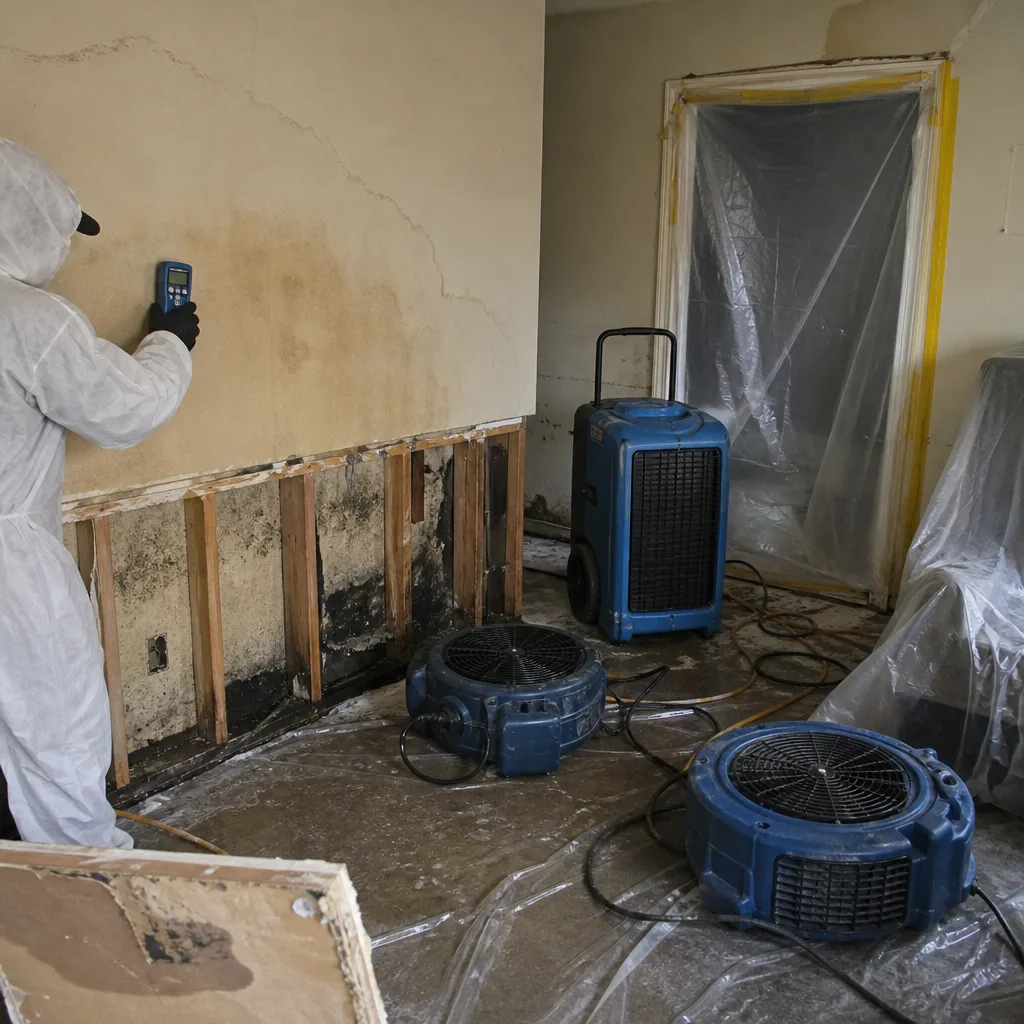 Before
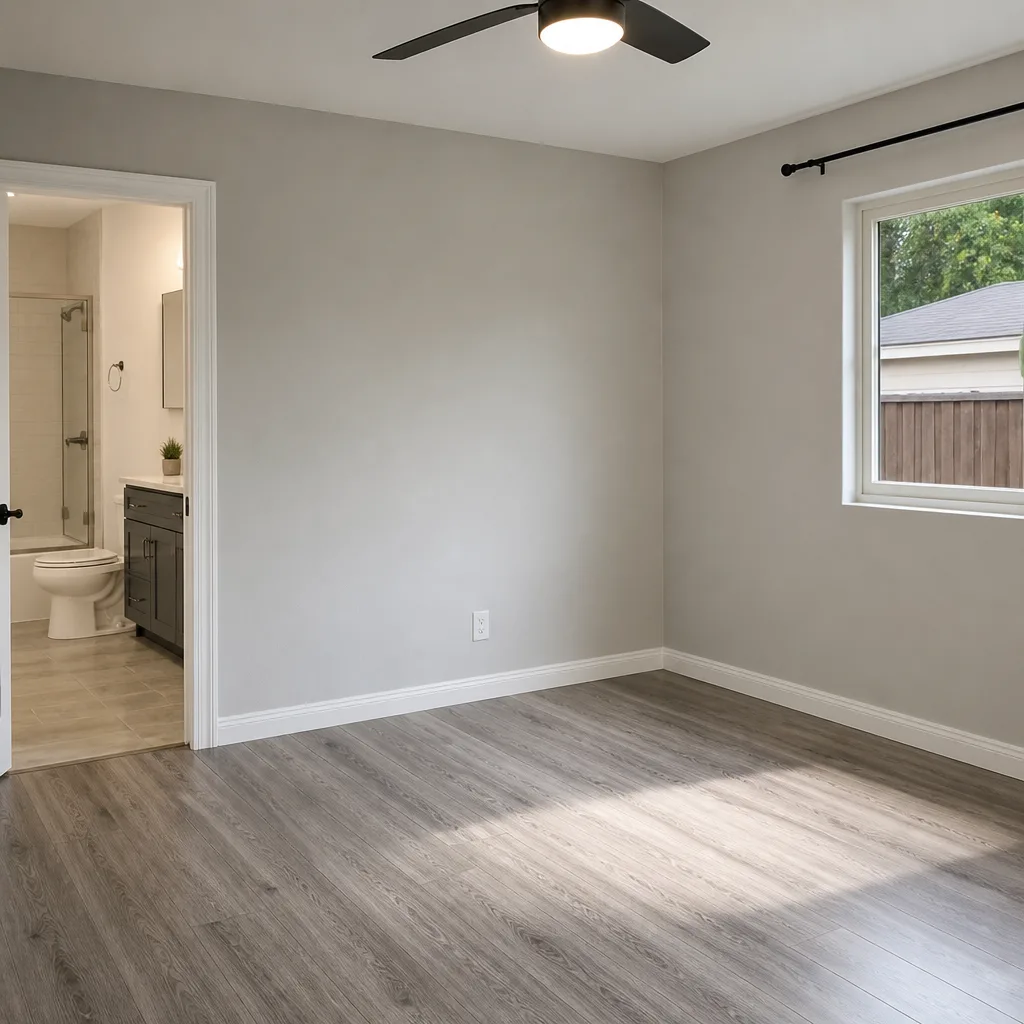 After
After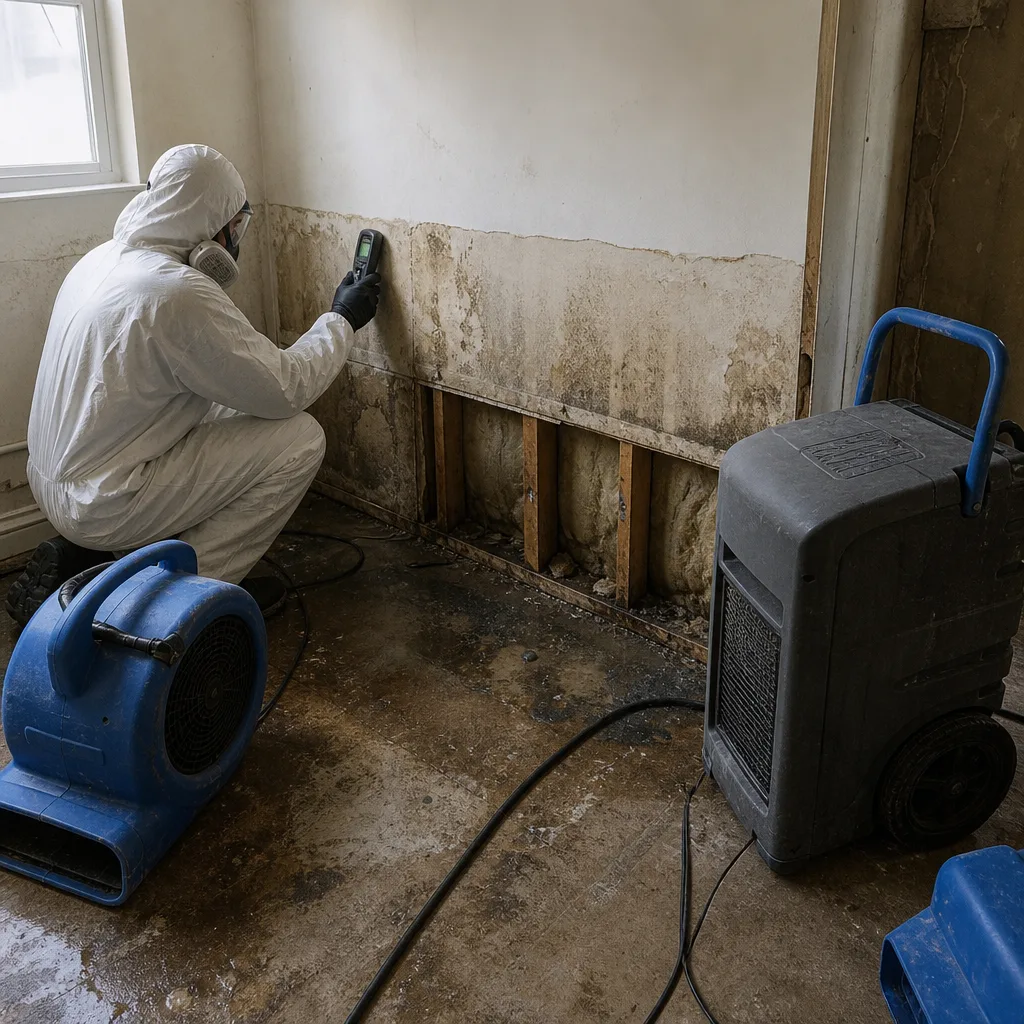 Before
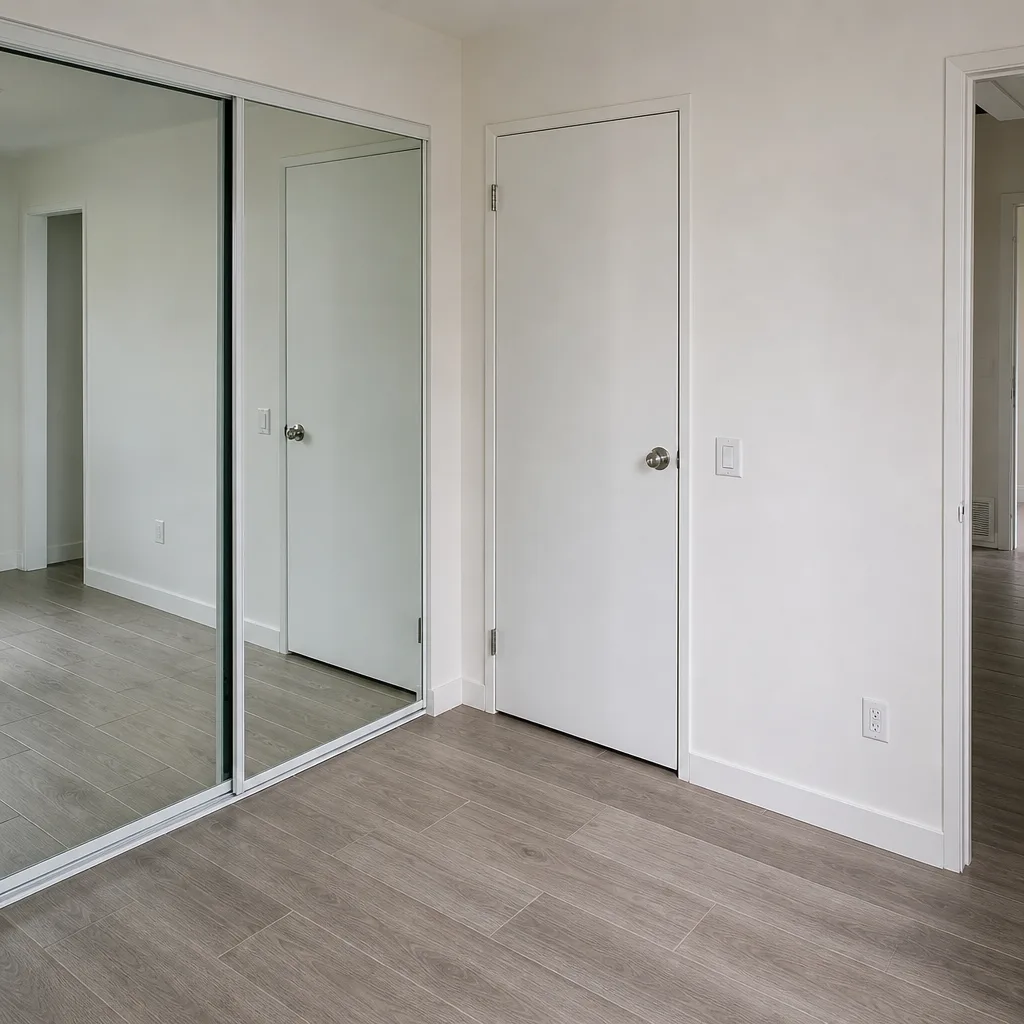 After
After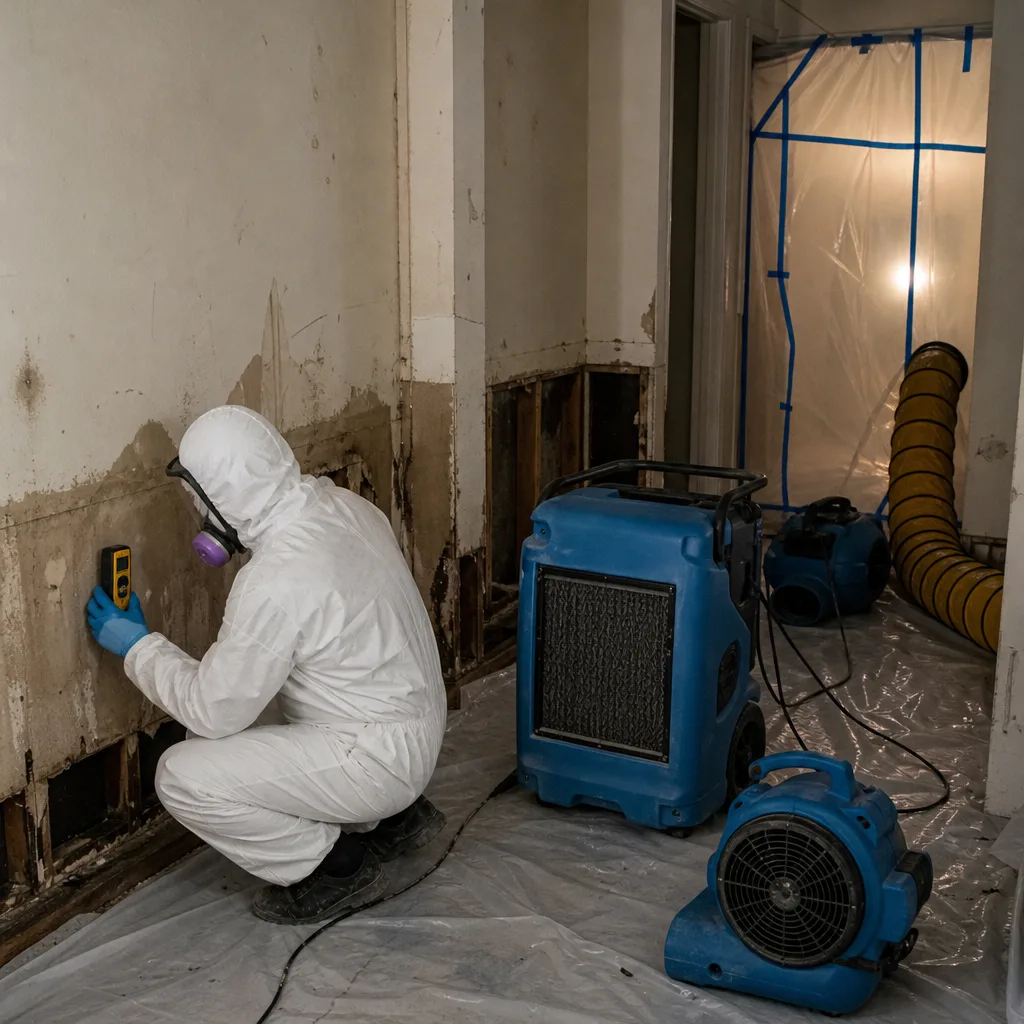 Before
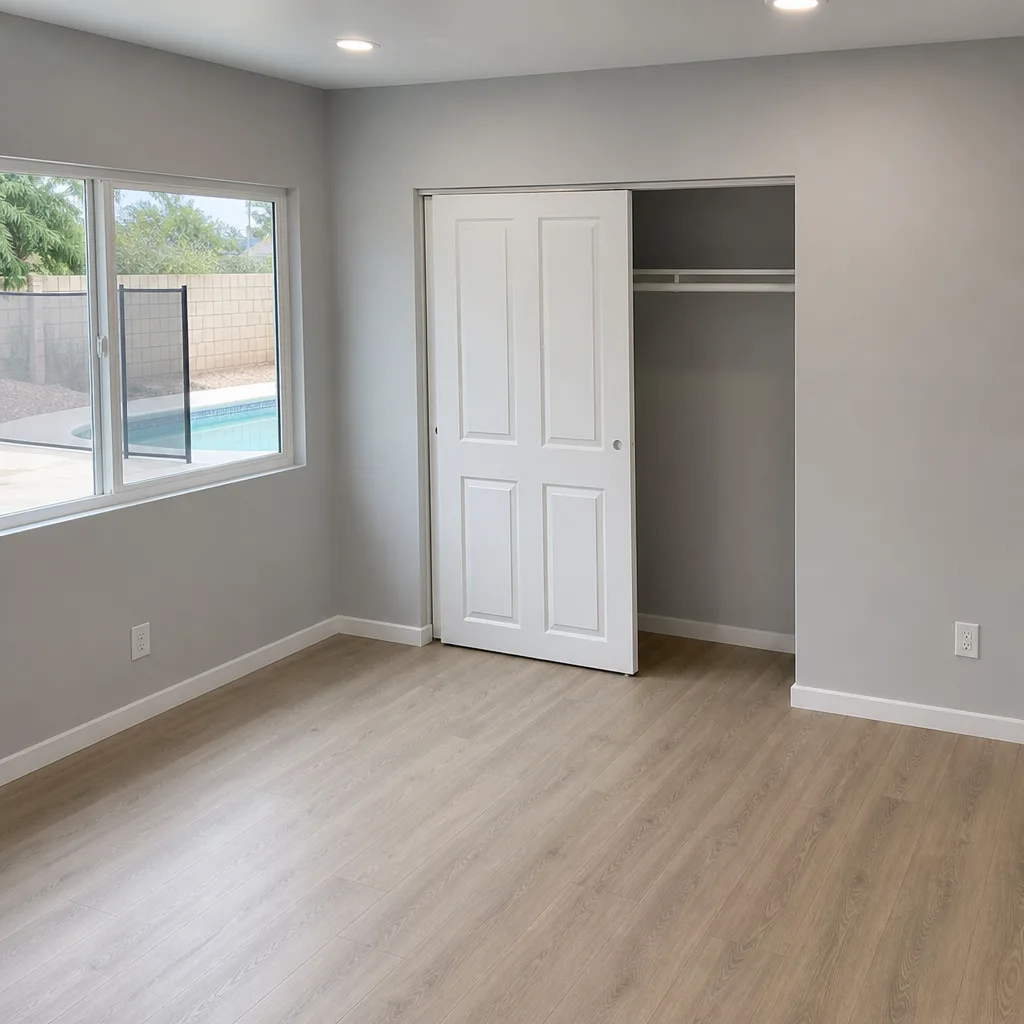 After
AfterWhen to Call a Professional
Call a professional when water has penetrated finished surfaces, when mold extends beyond a small area you can wipe clean, when smoke has affected more than one room, or when any structural component, like a floor joist, a ceiling, or a wall, is showing damage. If you’re weighing whether to handle it yourself, read DIY vs Professional Damage Restoration: The West Covina Homeowner’s Decision Guide. Call immediately for standing water on finished flooring, sewage backup, or a sagging ceiling. Call within 24 hours for any active leak you can’t stop yourself. And call before you start tearing things out: the documentation that matters most in a restoration claim is the condition of the home before demolition begins. Keegan Restoration West Covina offers free estimates in West Covina. Call (559) 249-4798 and a live person will answer, day or night.
Frequently Asked Questions
Water damage restoration in West Covina runs $2,500 to $8,500 for a typical single-room incident in 2026, and $9,000 to $25,000 for whole-home events. The range depends on drywall footage, flooring type, how long the water sat, and whether reconstruction is included. Call (559) 249-4798 for a written line-item estimate on your specific situation.
Homeowners insurance typically covers sudden, accidental water damage from burst pipes, water heater failures, and overflowing fixtures, but generally excludes damage from gradual leaks, poor maintenance, or flood events. West Covina properties outside mapped flood zones still rely on standard homeowners policies for most restoration work. For specifics about your policy, ask your adjuster, and ask your restoration contractor whether they document to insurance standards before you hire.
Mold remediation in West Covina runs $4 to $12 per square foot as a rough planning number in 2026, but square-footage pricing misses the fixed costs of containment, air scrubbing, and disposal. A small 100-square-foot bathroom may run $2,500, while a 500-square-foot wall cavity may run $5,000. The number that matters is the line-item estimate for your specific space.
Emergency water extraction crews in West Covina can typically arrive within 60 to 90 minutes during urgent situations, and same-day dispatch is standard for standing water. Keegan Restoration West Covina answers calls 24/7 with a live person, not a phone tree, so you’ll know the dispatch time before you hang up. Call (559) 249-4798 for current scheduling.
A reconstruction allowance is a placeholder number for repair work the contractor hasn’t measured yet, and it’s the most common source of price inflation in restoration. The allowance gets replaced with a real number once the walls are open, and that new number is often significantly higher. A legitimate written estimate measures and prices reconstruction before work starts, not after.
Yes, direct insurance billing is an administrative convenience that many restoration companies offer, and it doesn’t require signing away your claim rights. An Assignment of Benefits is a separate legal document that transfers your right to collect insurance proceeds to the contractor. Read an AOB carefully before signing and know exactly what you’re authorizing.
The Bottom Line
A fair price in restoration work is not the cheapest price or the most expensive price. It’s the price that’s written down before anything happens. In West Covina, where restoration jobs span old homes and new construction with wildly different repair costs, the written line-item estimate is the only tool that protects you from bait pricing, verbal estimates that drift, and the moment a crew adjusts the number once the drywall is open. Learn to read the line items, understand emergency premiums as separate charges, know what an AOB actually means, and hold every contractor to the same standard: written price before work starts. For deeper guidance on permits and compliance, see Damage Restoration Permits, Codes & Inspections in CA: What You Need to Know. That’s the whole game. Shane Pruitt and the team at Keegan Restoration West Covina answer the phone 24/7, write the price before work begins, and back every repair with the 365-Day Done Right Promise. Call (559) 249-4798 for a free estimate on your restoration job, and you’ll get a number you can hold someone to.
Written by Shane Pruitt, Owner at Keegan Restoration West Covina, serving West Covina since 2005. Browse more guides & resources on our blog.