
Last updated October 16, 2026
 Water damage drying
 Fire & smoke cleanup
 Mold remediation
 Storm response
 Sewage cleanup
 Reconstruction
Free visual inspection and a written scope of work before any mitigation begins - photos, moisture readings, and drying logs go in your claim file
The scope we write is the scope we bill. Anything new gets shown to you, in writing, before we touch it.
Get your free estimateHow to Hire a Damage Restoration Contractor in West Covina: A Step-by-Step Guide
California’s Contractor State License Board logs more than 20,000 consumer complaints in a typical year, and restoration contractors account for a disproportionate share of them. The reason isn’t that most restoration companies are dishonest. It’s that water and fire damage create urgency, and urgency makes homeowners skip the verification steps that would have protected them. This guide walks you through the hiring sequence we recommend to homeowners in West Covina, in the exact order that keeps you in control from the first phone call to the final invoice. For more context, see The Complete Guide to Damage Restoration in West Covina.
Restoration work we handle
Quick Answer
To hire a damage restoration contractor in West Covina, verify the company’s CSLB license first, then get a written scope of work and price before signing anything, and only sign the work authorization after you understand every line item and the clauses that allow price changes. You may also want to review our Water Damage Restoration Maintenance Checklist for West Covina Homeowners. A written price before work starts, a documented scope, and a contractor who will put a guarantee in writing are the three non-negotiables. Keegan Restoration West Covina follows this sequence on every job: license and credentials up front, written price before any work begins, and a 365-Day Done Right Promise in writing.
Table of Contents
- Step 1: Verify the CSLB License Before You Say Yes to Anything
- Step 2: Get the Written Scope and Price Before Signing
- Step 3: Read the Work Authorization Like a Contract, Because It Is One
- Step 4: Ask About Equipment and Drying Standards
- Step 5: Ask How the Contractor Documents Work for Insurance
- Step 6: Check the Guarantee Before You Check the Price
- Step 7: Trust Your Read on the Crew, Not the Sales Pitch
- Common Mistakes to Avoid
- When to Call a Professional
- Frequently Asked Questions
- The Bottom Line
Step 1: Verify the CSLB License Before You Say Yes to Anything
In California, any contractor performing restoration work over $500 in labor and materials must hold a valid license from the Contractors State License Board. The license number should be printed on the company’s website, business cards, and any estimate they hand you. Don’t take the printed number at face value. Go to the CSLB website and run the number yourself. It takes ninety seconds.
When you run the license, check three things. First, confirm the license is active, not suspended or expired. Second, confirm the name on the license matches the name on the contract. Third, check the license classification. Restoration contractors in California typically hold a B (General Building) license or a C-61/D-64 (Non-Specialized) classification. A company that shows up with a handyman license or no license at all is not legally permitted to perform structural drying, demolition, or reconstruction in West Covina.
What a Valid License Actually Protects
A CSLB license means the contractor has passed trade and law exams, carries a license bond, and is subject to the board’s complaint and disciplinary process. That bond exists for a reason: if the contractor fails to perform the work or violates the contract, you have a path to recovery. An unlicensed operator undercuts the market because they skip the bond, the insurance, and the accountability. When you hire them, you absorb those risks yourself.
Shane Pruitt, owner at Keegan Restoration West Covina, puts it this way: “The license isn’t a formality. It’s the line between a contractor who answers to a regulatory body and one who doesn’t answer to anyone.”
Step 2: Get the Written Scope and Price Before Signing
The most expensive mistake West Covina homeowners make is signing a work authorization before they have a written scope of loss. A scope of loss is the restoration industry’s term for a detailed, line-by-line description of exactly what work will be performed, what materials will be used, and what the work will cost. You should have this document in hand before you sign anything that authorizes work to begin.
Why the sequence matters: once you sign an authorization, the contractor can legally begin work and bill you for it. If the scope was verbal, or vague, or buried in a contract you didn’t read, you’ve just given up your leverage. The time to negotiate is before you sign, not after the drywall is opened.
What a Real Scope of Loss Includes
- Demolition line items: exactly which walls, floors, and ceilings get removed, and how far up the wall the cut goes.
- Extraction: how standing water will be removed, and the equipment used.
- Drying plan: the type and number of air movers and dehumidifiers, and the expected drying time in days.
- Reconstruction: every material to be replaced, from drywall thickness to trim profile to paint finish.
- Labor rates: the hourly or line-item rate for each category of work.
- Equipment rental: the daily rate for drying equipment and how many days are included.
At Keegan Restoration West Covina, the scope is governed by The Garrison Standard: the price is put in writing before any work begins, and that written price does not move at the door. If a contractor won’t give you a written scope before asking for a signature, that’s the first red flag. Walk away, or better yet, call someone else.
Step 3: Read the Work Authorization Like a Contract, Because It Is One
A work authorization is not a receipt. It’s a legally binding document that gives the contractor the right to enter your home, perform work, and bill you for it. In West Covina, where many homes were built in the 1950s and 1960s, restoration work often uncovers surprises behind the walls: asbestos in old drywall compound, knob-and-tube wiring, or cast iron plumbing that crumbles when disturbed. The work authorization determines who pays for those surprises.
The Clauses That Let Contractors Add Charges After the Fact
Read the authorization carefully before you sign. Look for these specific clauses:
- Change order authorization: Many authorizations include language saying the contractor may perform additional work “as needed” and bill for it without a new signature. Strike that language. Require a signed change order for any work beyond the original scope.
- Insurance assignment language: Some authorizations assign your insurance claim benefits directly to the contractor. You should understand this completely before agreeing to it. You have the right to receive payment and pay the contractor yourself.
- Open-ended materials allowances: A line that says “materials at cost” or “allowance to be determined” is not a price. Insist on specific dollar amounts.
- Arbitration clauses: A clause requiring binding arbitration can limit your legal options in a dispute. Know it’s there before you sign.
The Garrison Standard at Keegan Restoration West Covina eliminates these ambiguities. The written scope is the contract. Any change requires a written change order and your signature before additional work proceeds. No surprises, no door-price movement.
Step 4: Ask About Equipment and Drying Standards
The equipment a restoration contractor brings to your West Covina home tells you more about their operating standards than anything they’ll say in a sales pitch. Here’s the plain truth: a contractor who shows up with a few box fans and a rental dehumidifier from a big-box store is not performing professional-grade drying. They’re performing the appearance of drying.
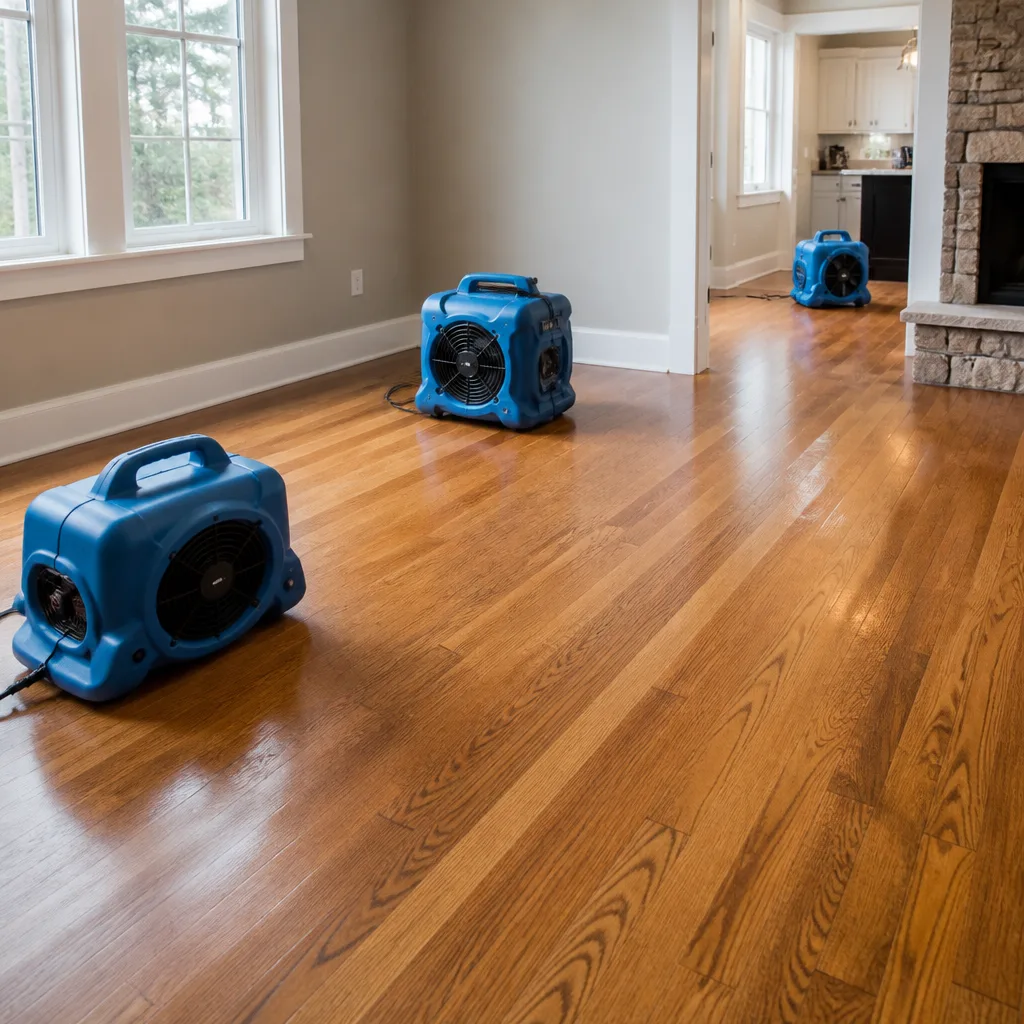
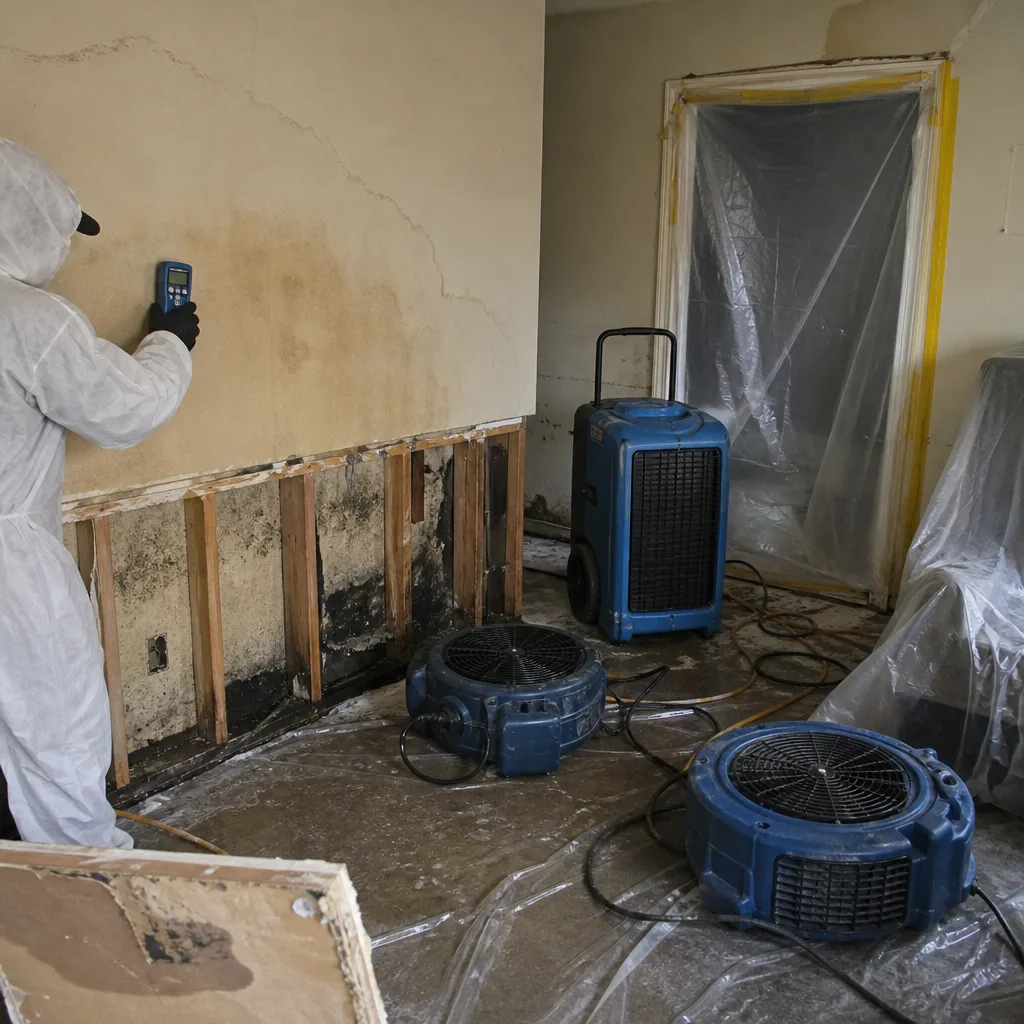
Professional water damage restoration uses specific classes of equipment. LGR (low-grain refrigerant) dehumidifiers are the industry standard for pulling moisture out of air and building materials. High-velocity air movers are placed in a calculated pattern to create evaporation across wet surfaces. Thermal imaging cameras and moisture meters are used to map the moisture migration through building materials and confirm the drying is complete, not guessed at.
Questions to Ask About Equipment
- “What type of dehumidifiers will you use?” The answer should be LGR, and they should be able to name the manufacturer. Brands like Dri-Eaz and Phoenix are the professional standard, used in IICRC-certified restoration work. If they can’t answer this question, they’re not doing restoration; they’re renting equipment and hoping.
- “How many air movers will you place, and where?” A professional explains the placement pattern based on the affected area and the moisture map. A hack says “Whatever it takes.”
- “How will you confirm the structure is dry?” The answer should involve moisture meters and documented readings, not “It feels dry to me.”
- “Do you follow IICRC or RIA drying standards?” If they don’t know what those acronyms mean, that’s your answer.
Keegan Restoration West Covina runs Dri-Eaz and Phoenix equipment alongside XPOWER, B-Air, and Injectidry systems, and our technicians operate in compliance with IICRC, RIA, and IFA industry standards. We document every moisture reading so you and your insurer can see the drying curve from start to finish.
Step 5: Ask How the Contractor Documents Work for Insurance
Here’s the difference between a restoration contractor that saves you money and one that costs you money: documentation. When you file an insurance claim for water or fire damage in West Covina, your adjuster needs evidence. Photos of standing water. Moisture maps showing where the water migrated. Line-item documentation of every hour of labor and every piece of equipment. A contractor who hands you a one-page invoice that says “Water damage repair: $8,500” is handing your adjuster a reason to deny coverage.
A contractor who documents every stage of the job in a format that supports your claim is doing half of your adjuster’s work for them. That speeds up your claim, increases the likelihood of full coverage, and reduces the back-and-forth that drags claims out for weeks. It’s one of the most valuable services a restoration contractor provides, and it’s completely invisible until you need it.
What Good Documentation Includes
- Time-stamped photos of the damage before, during, and after remediation.
- Moisture readings showing the progression to dry standard.
- Equipment logs showing what was placed, where, and for how many days.
- Line-item invoices that match the scope of loss and the adjuster’s estimating software.
- Direct communication with your adjuster, answering their questions in their language.
At Keegan Restoration West Covina, every job is documented and formatted to support your insurance claim. We photograph, we log, we map, and we communicate directly with your adjuster. It’s part of The Garrison Code: do it by the book, and leave a paper trail that proves it.
Step 6: Check the Guarantee Before You Check the Price
Most homeowners in West Covina comparison-shop restoration contractors on price alone. That’s backwards. A guarantee costs the contractor money, and a contractor who offers a real guarantee in writing has already priced that risk into their bid. The contractor who offers no guarantee, or a vague verbal promise, is cheaper because they’ve priced out the accountability.
Here’s the question to ask: “What happens if the repair fails six months from now?” If the answer is a shrug or a promise to “take a look at it,” you’re talking to someone who wants your money but not your problem. If the answer is a written guarantee with a specific term and a specific remedy, you’re talking to a professional.
Keegan Restoration West Covina backs every repair with the 365-Day Done Right Promise. It’s a written guarantee: if the repair fails within one year, we return and make it right at no charge. There’s also a free second visit included if the repair fails within the guarantee period. We put it in writing because a guarantee that isn’t written isn’t a guarantee. It’s a sales line.
Step 7: Trust Your Read on the Crew, Not the Sales Pitch
The salesperson who comes to your door after a water loss is not the crew who will be in your home for the next week. In West Covina, where many homeowners work long hours in LA or Orange County and aren’t home during the day, the crew matters more than the person who closed the deal. You’re letting strangers into your home when you’re not there. Your read on the crew should carry real weight.
Here’s what to look for:
- Uniforms and identification: A company that puts its technicians in uniform and provides visible ID is signaling operational discipline. A crew assembled from a day-labor app shows up in whatever they were wearing and can’t tell you who they work for.
- Background checks: Ask directly: “Are your technicians background-checked?” A professional company answers yes without hesitation and can tell you what the check covers. A company that hesitates or gets defensive is telling you something.
- Arrival windows: A company that gives you a two-hour window and shows up inside it is running a schedule. A company that says “We’ll be there sometime today” is running a hope. The Garrison Code’s first value is explicit: show up inside the window.
- Site cleanliness: Professional restoration crews protect undamaged areas, contain the work zone, and leave the site clean at the end of each day. A crew that tracks debris through your living room is telling you how they’ll treat the rest of the job.
Keegan Restoration West Covina sends background-checked, uniformed technicians on every job. They’re dispatched from a location that runs to The Garrison Standard, and they know that the first value in The Garrison Code is showing up inside the window they gave you.
Common Mistakes to Avoid
- Signing the authorization before reading the scope. The authorization is a contract. If you sign it before the scope of work exists in writing, you’ve authorized work you haven’t agreed to. That’s how door-price movement happens.
- Hiring an unlicensed contractor to save money. In West Covina, an unlicensed operator skips the bond, the insurance, and the regulatory accountability. The savings disappear the first time something goes wrong and you have no recourse.
- Accepting vague change-order language. “Additional work as needed” means the contractor decides what’s needed and bills you for it. Strike that language and require a signed change order for anything beyond the original written scope.
- Not asking about equipment. Consumer-grade fans and rental dehumidifiers are not professional drying equipment. If the contractor can’t name their dehumidifier brand, they can’t dry your home to standard.
- Choosing the lowest bid without comparing scopes. In restoration, a lower bid usually means a thinner scope: fewer line items, cheaper materials, fewer days of drying. Compare the written scopes side by side before comparing the prices on the last page.
- Ignoring the guarantee because it’s not in the moment. The repair will be tested over the next year, through a West Covina summer and a rainy winter. A written one-year guarantee is worth more than a $400 discount on the initial bid.
- Not verifying who will actually be in your home. The company name on the truck matters less than the background-checked status of the person holding the key. Ask about who gets dispatched and how they’re vetted.
When to Call a Professional
Call a professional the moment you discover water damage that extends beyond what a mop can handle, any fire damage that touched structural materials, or visible mold growth larger than a dinner plate. Water migrates through drywall, under flooring, and into wall cavities within hours. What looks like a damp corner on Tuesday is a full cavity drying job by Thursday. The cost of waiting is almost always higher than the cost of the initial extraction. Keegan Restoration West Covina offers free estimates in West Covina, and a live person answers the phone 24 hours a day, 7 days a week. Call (559) 249-4798.
Frequently Asked Questions
Water damage restoration in West Covina typically ranges from $2,500 to $8,000 for a standard single-room water loss, depending on the extent of the damage, the drying time required, and whether reconstruction is needed. The final price depends on the written scope, and you should receive that scope before signing anything. Call Keegan Restoration West Covina at (559) 249-4798 for a free estimate with the price in writing before any work starts.
Most homeowners insurance policies in California cover sudden and accidental water damage, such as a burst pipe or an appliance overflow, but typically exclude gradual damage from long-term leaks or poor maintenance. For year-round prevention tips, read our Seasonal Damage Restoration Care for West Covina: Year-Round Homeowner’s Guide. The key to maximizing your claim is documentation: a contractor who photographs, logs, and maps the damage in a format your adjuster can use will significantly improve your chances of full coverage. Keegan Restoration West Covina documents every job to support your insurance claim and communicates directly with your adjuster.
For active water damage, a professional restoration company should be able to respond within hours, because every hour of standing water increases the extent of the damage and the cost of the repair. Keegan Restoration West Covina answers the phone with a live person 24 hours a day, 7 days a week, including nights, weekends, and holidays. Call (559) 249-4798 when the water is active, and we’ll dispatch a crew to West Covina that same day.
If water has penetrated drywall, flooring, or wall cavities, you need professional drying, not just surface cleaning. Water trapped inside building materials will support mold growth, structural deterioration, and odor problems even after the visible surface is dry. A professional restoration contractor uses moisture meters and thermal imaging to determine whether the structure has reached the dry standard, and documents those readings for your insurance claim. If you’re not sure, call Keegan Restoration West Covina for a free assessment.
Look for a written scope of work, a specific price, a clear change-order procedure that requires your signature for any additional work, and no open-ended materials allowances. If the authorization includes language allowing the contractor to perform additional work “as needed” without your written approval, strike that language before you sign. The Garrison Standard at Keegan Restoration West Covina requires a written price before any work begins, and no changes proceed without your signature.
Yes. Keegan Restoration West Covina has been part of the Garrison Partners family since 2005, and every job is performed to The Garrison Standard: written price before work starts, background-checked uniformed technicians, and the 365-Day Done Right Promise in writing. We provide water damage restoration, fire damage restoration, and mold remediation in West Covina. Call (559) 249-4798 to request a free estimate.
The Bottom Line
Hiring a damage restoration contractor in West Covina is a sequence, and the sequence is: verify the license, get the written scope and price, then sign the authorization. Reverse any step and you’re negotiating from a weakened position. The right contractor will show you their license without being asked, put the price in writing before touching anything, document the job for your insurer, and back the repair with a written guarantee. Keegan Restoration West Covina does all four, on every job, to The Garrison Standard. If you’re facing water, fire, or mold damage, call (559) 249-4798 and ask for a free estimate. A live person answers, day or night.
Written by Shane Pruitt, Owner at Keegan Restoration West Covina, serving West Covina since 2005. Browse more guides & resources on our blog.
Learn more about Keegan Restoration West Covina home, our Water Damage Restoration in West Covina services, Fire Damage Restoration in West Covina, and Mold Remediation in West Covina.
See the difference
 Before
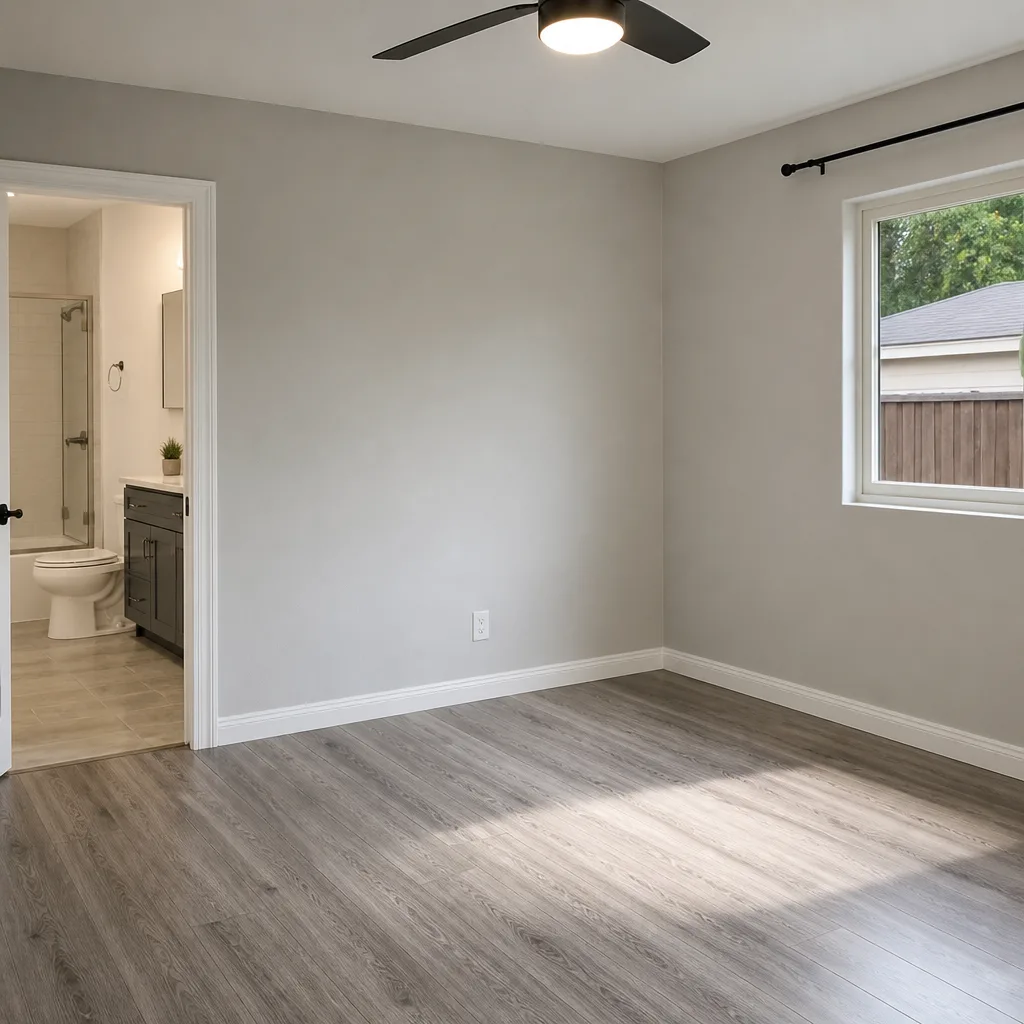 After
After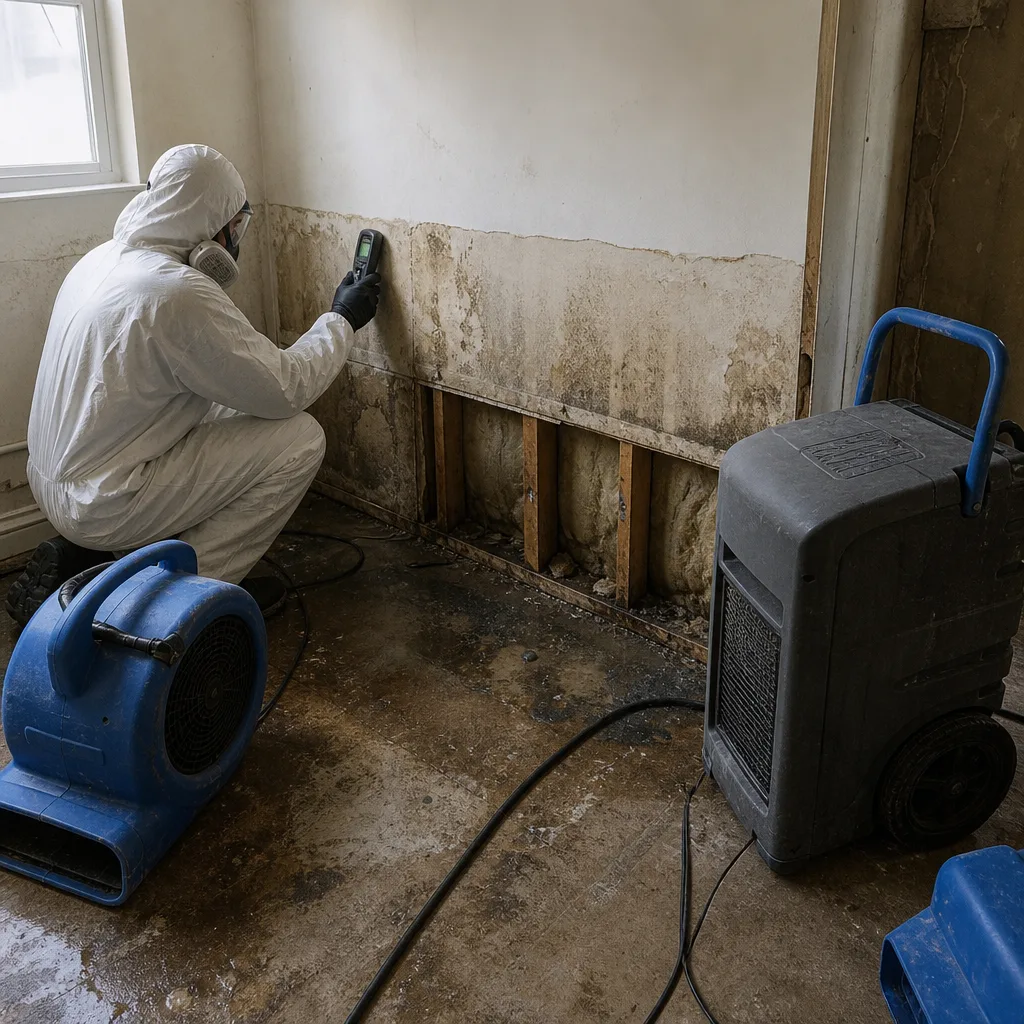 Before
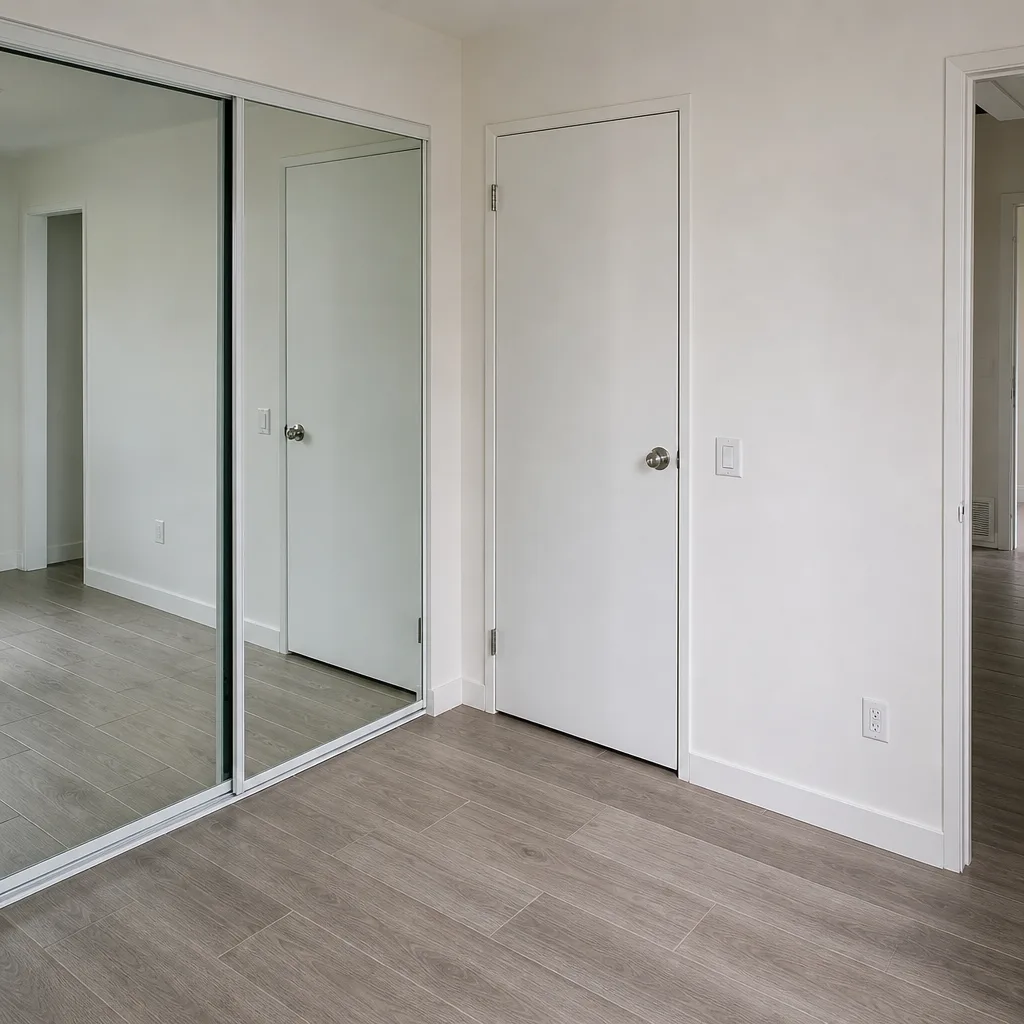 After
After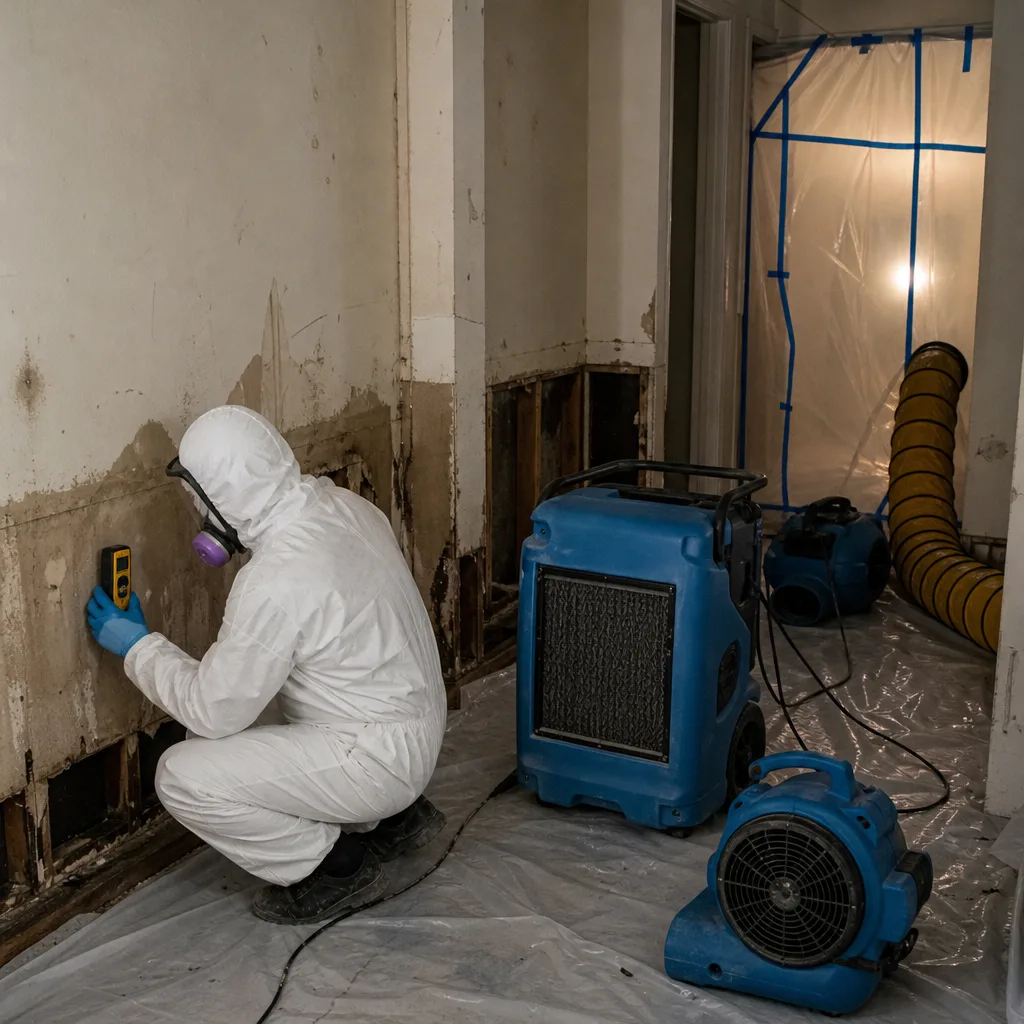 Before
 After
After