
Last updated October 16, 2026
 Water damage drying
 Fire & smoke cleanup
 Mold remediation
 Storm response
 Sewage cleanup
 Reconstruction
Free visual inspection and a written scope of work before any mitigation begins - photos, moisture readings, and drying logs go in your claim file
The scope we write is the scope we bill. Anything new gets shown to you, in writing, before we touch it.
Get your free estimateDIY vs Professional Damage Restoration: The West Covina Homeowner’s Decision Guide
Here’s the scenario we see play out in West Covina at least once a month. A homeowner finds standing water in the living room after a supply line fails. They grab a shop vac, pull up what carpet they can, point every box fan they own at the wet area, and go to bed feeling like they handled it. Sixty days later, they’re opening a $6,000 mold remediation quote because consumer fans create airflow without removing moisture, and that combination in a sealed Southern California room accelerates mold growth faster than doing nothing at all. This guide draws the real line between what a West Covina homeowner can safely handle and what requires a documented professional response. You’ll learn what consumer equipment actually does, what your insurance adjuster is looking for, and what California law requires you to disclose when you eventually sell.
Quick Answer
DIY restoration is appropriate for stopping the source, moving personal property, and documenting initial damage with photos. It is not appropriate for structural drying, because consumer equipment cannot achieve the moisture removal standards your insurance claim and your home’s indoor air quality require. In West Covina, hiring a professional restoration contractor for water, fire, or mold damage typically costs $2,000 to $8,000 depending on scope, while the cost of undocumented DIY drying often lands at $4,000 to $12,000 in secondary mold remediation and reduced insurance payouts. For guidance on selecting the right professional, see our How to Hire a Damage Restoration Contractor in West Covina: A Step-by-Step Guide.
Restoration work we handle
Table of Contents
- The Real Question Isn’t Capability, It’s Documentation
- Why Consumer Equipment Fails at Restoration
- The Insurance Claim Consequence of DIY First Response
- California Disclosure Law and Your Home’s Resale
- What DIY Is Actually For
- What Professional-Grade Equipment Actually Means
- How to Verify a Contractor Is Using the Right Equipment
- Real Cost Comparison: DIY vs Professional in West Covina
The Real Question Isn’t Capability, It’s Documentation
Most West Covina homeowners are perfectly capable of running a shop vac. That’s not the point. The point is that restoration work exists at the intersection of three systems you cannot control with consumer tools: your insurance policy’s proof-of-loss requirements, your home’s resale disclosure obligations, and the moisture physics happening inside your wall cavities.
When water migrates into drywall, it wicks upward and outward. Within 48 hours, moisture trapped behind baseboards begins supporting microbial growth. Within 72 hours, that growth is typically established enough to require professional remediation rather than simple drying. The difference between a $2,000 drying job and a $6,000 mold job is often just the 36 hours between a homeowner deciding to handle it themselves and realizing they’re losing the fight.
In our experience across West Covina neighborhoods like Woodside, Sunset Palms, South Hills, and the estates near Galster Wilderness Park, the homes that recover fastest from water events share one thing: someone called a professional within the first day. The homes that spiral into secondary damage almost always follow the same script. The homeowner tried to dry it themselves, waited until the musty smell arrived, and only then reached out.
What matters on your claim and at your resale table is not whether you’re capable. It’s whether the work was performed to a documented standard by a party whose measurements, methods, and moisture readings an adjuster and a buyer will accept. Your shop vac receipt doesn’t carry that weight.
Why Consumer Equipment Fails at Restoration
Here’s the technical reality most homeowners never hear: box fans and opening windows do not dry structures. They move air. Moving air across a wet surface accelerates evaporation, which sounds like progress until you realize the water hasn’t left the room. It’s now suspended in the air as humidity. Without dehumidification to remove that moisture from the air envelope, evaporation simply relocates the water from your carpet pad into your drywall, your cabinetry, and your wall cavities.
Professional restoration uses a calculated ratio of air movement to moisture removal. The industry standard, documented in IICRC S500, calls this psychrometrics: the science of managing temperature, humidity, and airflow simultaneously to drive moisture out of materials and into the air, then out of the air entirely.
Consumer Box Fans vs LGR Dehumidifiers
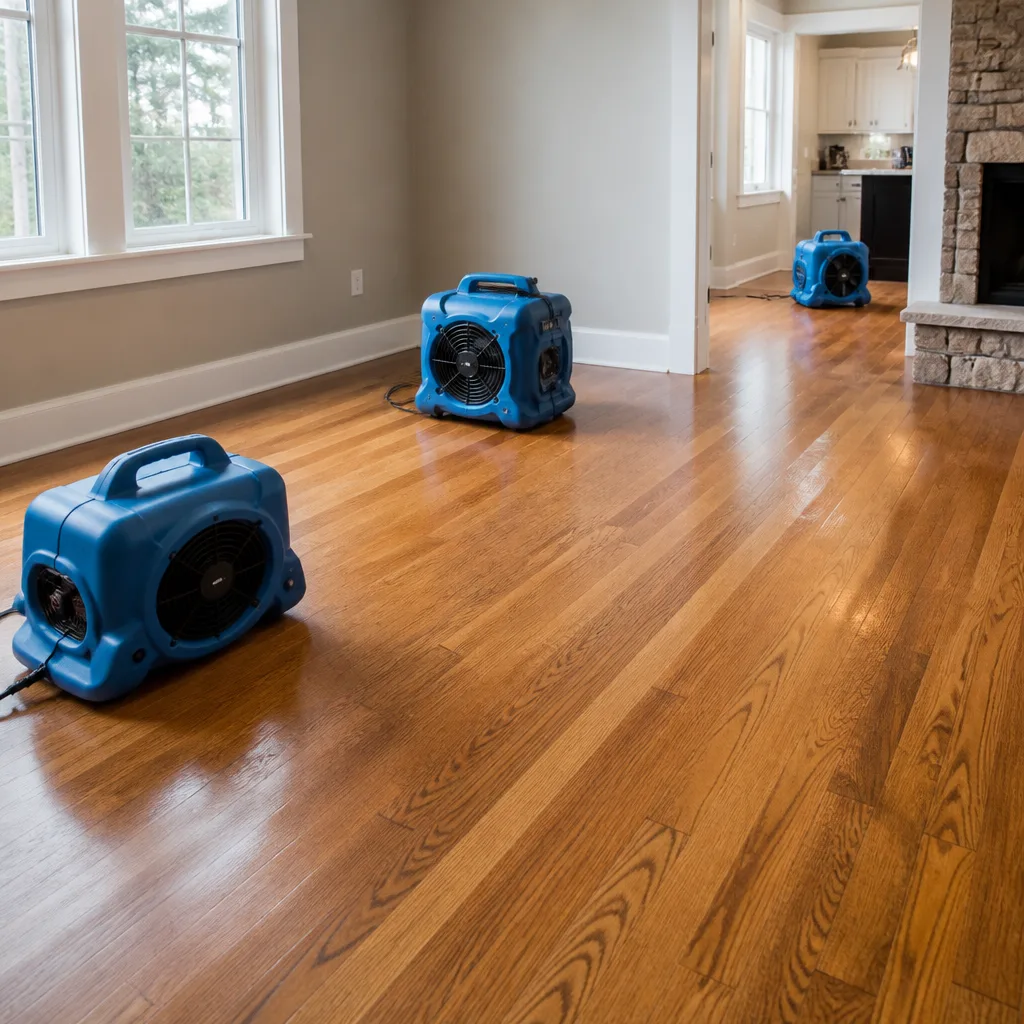
A consumer box fan moves 1,500 to 2,500 cubic feet per minute of air. A professional air mover from brands like XPOWER or B-Air moves 2,500 to 4,500 CFM, and it’s placed according to a drying plan that accounts for wall cavity depth, flooring type, and the specific materials affected. But the fan is only half the equation.
The real difference is the dehumidifier. A big-box store dehumidifier pulls 30 to 50 pints of water per day under ideal conditions. A professional low-grain refrigerant (LGR) dehumidifier pulls 130 to 180 pints per day at the humidity levels actually present in a water-damaged room. More importantly, LGR units continue pulling moisture efficiently as the room dries, because their coils are designed to run cool enough to condense water at low relative humidity. Consumer units taper off exactly when the hard-to-reach moisture is releasing.
In a sealed West Covina room in August, where ambient humidity rarely drops below 50%, the difference between an LGR and a consumer dehumidifier is the difference between reaching structural dry standard in three days versus never reaching it at all. Our Water Damage Restoration Maintenance Checklist for West Covina Homeowners covers the equipment and steps that actually protect your property.
The Insurance Claim Consequence of DIY First Response
Your insurance policy requires you to mitigate further damage. What it doesn’t spell out is that undocumented self-mitigation can actually reduce your payout. Here’s how adjusters think about DIY restoration.
An adjuster walks into a home where the homeowners extracted water themselves and dried for a week with rental equipment. The adjuster asks for documentation: moisture readings, daily logs, drying chamber records, equipment specifications. The homeowner has none. The adjuster now has grounds to argue that the damage being claimed was caused by the homeowner’s inadequate drying attempt, not the original water event. The claim gets disputed, the scope gets reduced, or in worst cases, the secondary damage gets excluded entirely.
Now consider the same home where a professional restoration company handled the loss. The file contains a written scope of loss, initial and daily moisture readings, a drying plan, equipment logs, and a final clearance report documenting that the structure met IICRC S500 dry standard. The adjuster has nothing to dispute. The claim moves.
This is why every job we run at Keegan Restoration West Covina home includes full photo documentation, moisture mapping, and daily progress reports formatted to support your insurance claim. The documentation isn’t a courtesy. It’s the difference between a claim that pays and a claim that fights.
For West Covina homeowners specifically, this matters because LA County claims volumes spike after heavy rain events. Adjusters are processing hundreds of files. The cleaner your documentation, the faster your claim settles. The messier your DIY attempts, the more scrutiny your file receives. Our Seasonal Damage Restoration Care for West Covina: Year-Round Homeowner’s Guide explains how to prepare for these seasonal spikes.
California Disclosure Law and Your Home’s Resale
California Civil Code Section 1102 requires sellers to disclose all known material facts about a property’s condition, including prior water damage, mold, and repairs. The standard Transfer Disclosure Statement has a specific section for water damage and mold. If you had a water event and did not remediate it professionally, you still have to disclose it. The buyer’s inspector may find evidence regardless.
Here’s what changes between a DIY response and a professional one at the resale table:
- Documented professional restoration: You disclose a water event, provide the contractor’s full documentation showing the structure was dried to standard and repaired to pre-loss condition, and the sale moves forward with minimal friction. The buyer’s insurance company accepts the file.
- Undocumented DIY attempt: You disclose a water event, provide a Home Depot receipt and a verbal account, and the buyer’s inspector flags moisture staining behind a baseboard. The buyer requests a mold inspection. The mold inspection finds elevated spore counts. The deal reopens, the price drops, or the sale collapses.
- Failure to disclose: If you don’t disclose and the buyer discovers prior water or mold damage after closing, you may face liability under California’s mandatory disclosure law. This is a legal exposure, not a reputation issue.
When we complete Water Damage Restoration in West Covina, the final file includes moisture readings showing the structure reached dry standard, photographs of affected areas before and after, and equipment logs. That file is your disclosure documentation. It answers the buyer’s questions before they become contingencies.
The same applies to Mold Remediation in West Covina. A professional clearance report from a remediation contractor, showing post-remediation air samples at or below outdoor control levels, satisfies the disclosure requirement in a way that bleach and elbow grease never will.
What DIY Is Actually For
There is a narrow category of tasks where DIY is not just acceptable, but genuinely helpful. These tasks reduce loss, speed professional response, and cost you nothing in documentation value.
Appropriate DIY Tasks Before and During a Water Damage Event
- Stop the water at the source. Shut off the main water valve or the fixture supply line. Every minute of active water flow adds to the scope.
- Kill the power if water is near outlets or appliances. Flip the breaker for affected rooms. Do not enter standing water near electrical sources.
- Move personal property out of wet areas. Furniture, electronics, boxes, rugs. Move them to a dry room or outside. This is the highest-value DIY task.
- Take comprehensive photos. Before you move anything, photograph every wet area from multiple angles. Include baseboards, wall tops, and flooring seams. Your insurance company will ask for these.
- Protect undamaged areas. Use plastic sheeting to block airflow from wet rooms into dry rooms. This limits migration of moisture and mold spores.
- Remove small amounts of surface water. A shop vac on hard surfaces or a mop for a minor overflow is fine as a stopgap while waiting for professional assessment.
What DIY Should Not Attempt
- Cutting into drywall to “check for water.” You don’t know what’s behind the wall: electrical, insulation, or contamination category water that should be handled with PPE.
- Setting up drying fans and running them for a week. Without moisture measurement and dehumidification, this spreads the problem as described above.
- Lifting carpet and padding yourself. Carpet pad in a water-damaged room absorbs 10 to 20 times its weight in water. Lifting it without containment disperses contaminated water and any microbial growth into unaffected areas.
- Using household bleach on mold or water stains. Bleach does not penetrate porous materials and its use on mold is explicitly discouraged by the EPA as a remediation method.
- Attempting fire damage cleanup beyond surface wiping. Soot is carcinogenic and requires appropriate filtration and PPE. See our Fire Damage Restoration in West Covina guide for what professional fire restoration actually involves.
The line is simple. If a task stops water from continuing to flow, moves property, or records evidence, do it. If a task claims to remove moisture from building materials, it’s professional work.
What Professional-Grade Equipment Actually Means
Homeowners in West Covina are smart enough to ask what they’re paying for. Here’s an honest breakdown of what sits in a professional restoration truck versus what you can rent or buy at a big-box store.
Extraction Equipment
Professional-grade extraction includes truck-mounted or portable extractors that pull water from carpet and pad at pressures consumer wet vacs cannot achieve. A portable extraction unit like those used on multi-story West Covina condos pulls 100 to 150 inches of water lift. A shop vac pulls 50 to 70. The difference matters when water has saturated into subfloor.
Air Movers
Professional air movers from XPOWER and B-Air are designed for directed airflow across specific surfaces. They’re placed to create vortexes inside wall cavities and under floating floors. Consumer fans create generalized room circulation. Different functions entirely.
Low-Grain Refrigerant (LGR) Dehumidifiers
As covered above, these are the core of structural drying. They operate efficiently to 40 degrees Fahrenheit dew point and below, pulling moisture from materials long after consumer units plateau.
Desiccant Dehumidifiers
In cases of severe saturation or when dealing with wall cavities, desiccant units from brands like Injectidry are used. These use a rotating silica gel wheel to remove moisture at humidity levels LGR units can’t reach. They’re essential for drying inside wall cavities without removing drywall when the damage is borderline.
Injection Drying Systems
Injectidry panel systems push dry air directly into wall cavities and under cabinets through small ports. This allows professional drying of structural cavities without demolition, which preserves the original construction and reduces rebuild cost. No consumer counterpart exists.
Moisture Measurement and Documentation
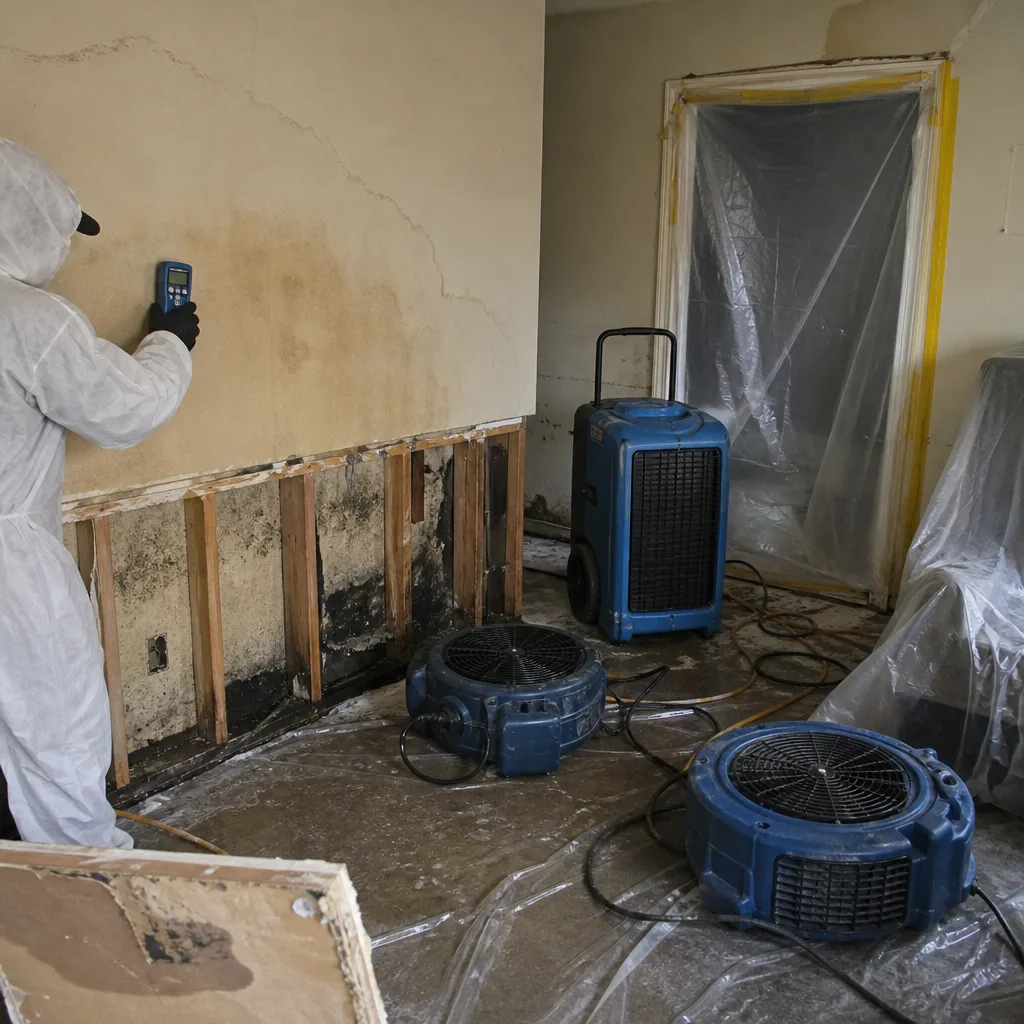
Professional restoration includes daily moisture mapping using penetrating and non-penetrating moisture meters, thermal imaging cameras, and humidity sensors. The readings are logged and reported. This data is what your insurance adjuster reviews, and what proves the structure reached dry standard. Without it, you’re guessing.
Our Keegan Restoration West Covina home crews run Dri-Eaz, Phoenix, XPOWER, B-Air, and Injectidry equipment, operated in compliance with IICRC, RIA, and IFA standards. You don’t have to take our word for it. You can ask to see the equipment inventory on the truck, and you can request the moisture logs at any point during the job.
How to Verify a Contractor Is Using the Right Equipment
West Covina homeowners who want to verify a restoration contractor before signing should run through this checklist. Any legitimate professional will answer these questions without hesitation.
- Ask what dehumidifier they’ll use. The answer should include “LGR” or “desiccant,” not “commercial dehumidifier” or vague language. If they can’t name the unit type, they don’t run professional drying.
- Ask about moisture readings. They should describe initial moisture levels, target dry standard according to IICRC S500, and daily monitoring. If they say they’ll “just run fans for a few days,” that’s not restoration.
- Ask for the written scope before work starts. The price should be in writing, itemized by labor, equipment, and materials, before anyone touches your home. If they won’t put the price in writing, find another contractor.
- Ask about drying documentation. The final file should include daily moisture logs, equipment placement records, and photos. This is your insurance documentation and your resale disclosure file.
- Ask about their standard. They should be able to reference IICRC S500 for water damage, IICRC S520 for mold remediation, or NFPA for fire restoration. If they’ve never heard of these, they’re operating outside industry standard.
- Ask about the warranty. The 365-Day Done Right Promise at Keegan Restoration West Covina means every repair is backed in writing for a full year. If the repair fails within that window, we return and make it right at no charge. If a contractor won’t put a warranty in writing, the risk sits with you.
This verification runs to The Garrison Standard: show up inside the window, price in writing, do it by the book, leave the site clean, stand behind the work for a full year. It’s the code our crews work under on every job in West Covina, and it’s a standard any homeowner should demand from any restoration contractor.
Real Cost Comparison: DIY vs Professional in West Covina
Here’s what these scenarios actually cost in the West Covina market, based on typical water damage events in a 1,600 to 2,200 square foot single-family home.
| Scenario | DIY Cost | Professional Cost | Likely Outcome |
|---|---|---|---|
| Minor supply line leak, caught within 2 hours, hard surface flooring | $150 to $400 (shop vac rental, fans, cleaning supplies) | $1,200 to $2,500 (extraction, 3-5 days drying, documentation) | DIY often adequate for surface drying only; professional recommended if water reached walls |
| Appliance overflow, carpet and pad saturated, 200-400 sq ft | $600 to $1,200 (wet vac, fans, possible rental dehumidifier, pad replacement) | $2,500 to $5,000 (extraction, full drying, pad replacement, documentation) | DIY frequently fails within 30-60 days from mold in subfloor; professional resolves completely |
| Water heater failure, water in multiple rooms and wall cavities | $1,000 to $2,000 (significant rental equipment, disposal, potential drywall cutting) | $4,000 to $8,000 (full mitigation, drying chambers, possible injectidry wall drying, repair) | DIY results in near-certain secondary damage; professional resolves within 7-10 days |
| Sewage backup, any affected area | Cannot be safely DIY’d | $5,000 to $12,000 (containment, category 3 extraction, antimicrobial treatment, structural drying, repair) | Professional only. DIY sewage contact is a health hazard. |
| Kitchen fire, smoke and soot damage throughout | Cannot be safely DIY’d | $6,000 to $20,000+ (soot removal, structural cleaning, ozone/deodorization, repair) | Professional only. Smoke damage requires industrial HEPA filtration and chemical sponge work. |
The pattern is consistent. On minor events where water never touched porous materials, DIY works. On any event where water entered carpet, drywall, cabinetry, or wall cavities, DIY almost always costs more in the long run, because the secondary mold remediation and insurance claim disputes cost more than the professional mitigation would have.
Common Mistakes to Avoid
- Waiting to call because “it’s not that bad.” In West Covina’s dry climate, homeowners often believe the water will evaporate on its own. What actually happens is moisture wicks into drywall and cabinetry, where it stays trapped and supports mold growth in the wall cavity for weeks.
- Running box fans without dehumidification. As covered in detail above, this shifts moisture from flooring into the air, then into walls and ceilings. It’s the single most common mistake we see from well-intentioned homeowners.
- Lifting carpet themselves and throwing it outside. This tears the pad, which is actually the best evidence of saturation for the adjuster. It also spreads contaminated water across unaffected flooring. Leave the carpet for professional extraction.
- Using a household dehumidifier from Costco. A 30-pint residential unit cannot achieve the moisture removal rate needed for structural drying. It runs continuously for a week, the homeowner thinks drying is occurring, and meanwhile the wall cavity is growing mold.
- Not photographing before moving things. Your adjuster needs to see the loss as it was. If you’ve already moved furniture and soaked belongings, the claim gets harder to prove. Photograph everything first.
- Accepting a verbal estimate. If a contractor won’t put the price in writing before starting, you have no protection against the door-price move. In restoration, verbal estimates are worthless. The Garrison Standard exists because too many West Covina homeowners have been burned by exactly this practice.
- Treating mold with bleach and paint. Bleach doesn’t kill mold on porous surfaces. Kilz doesn’t remove it from the wall cavity. You’re painting over a problem that will return, and you’ve now made future remediation more expensive because the surface has been sealed over.
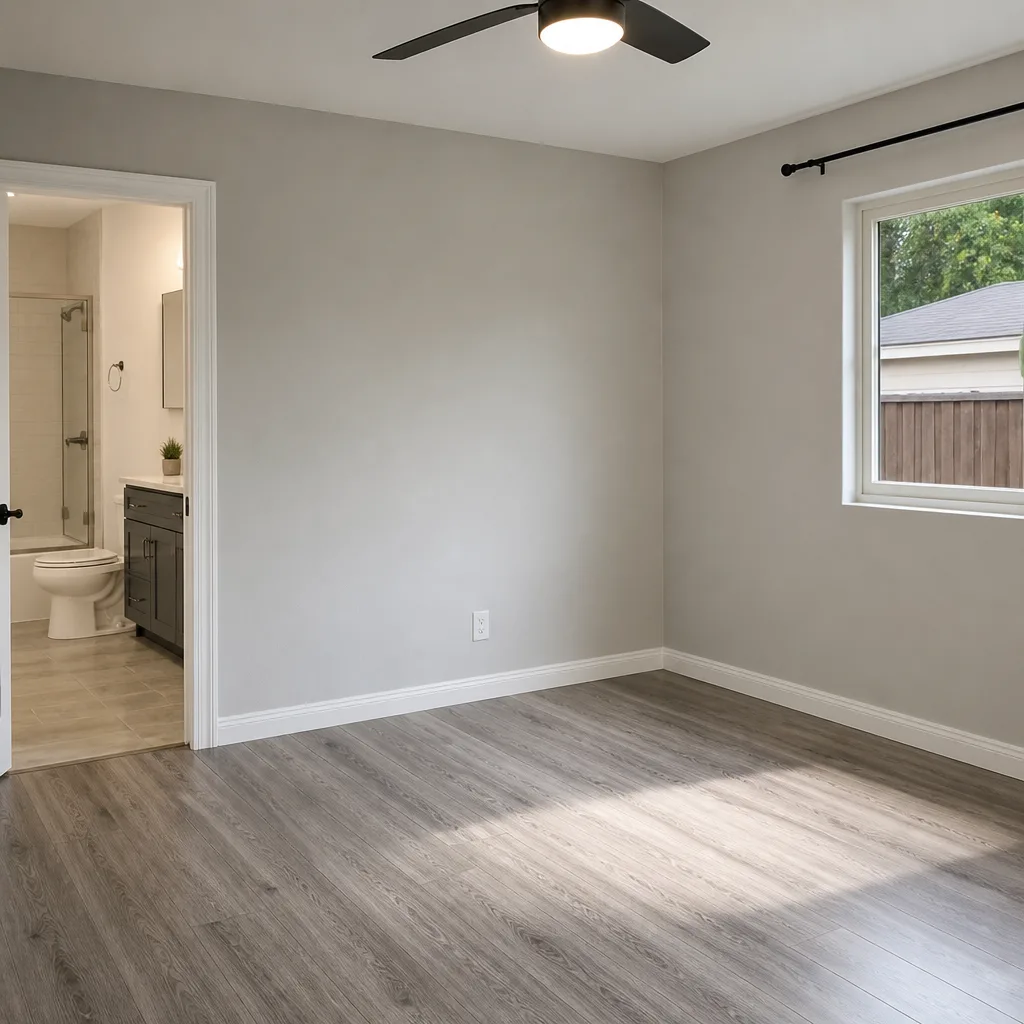
See the difference
 Before
 After
After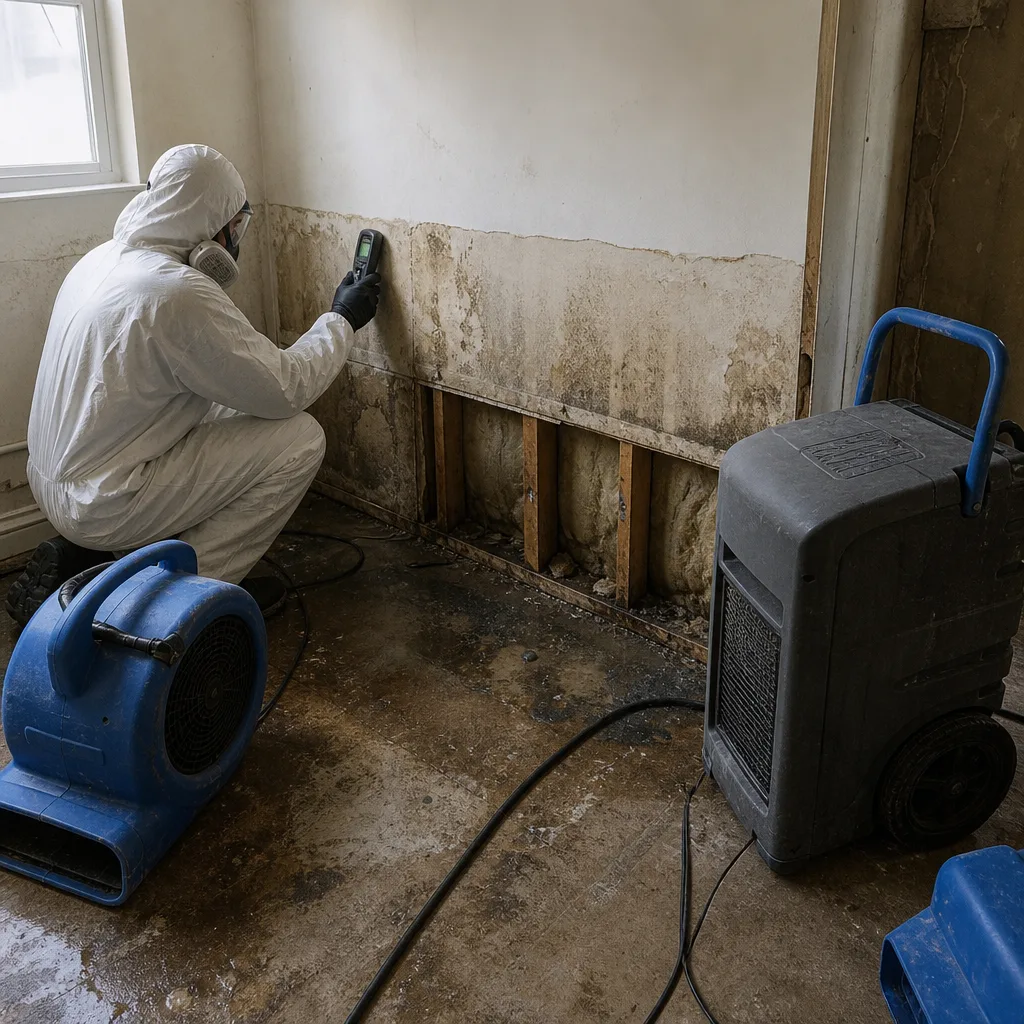 Before
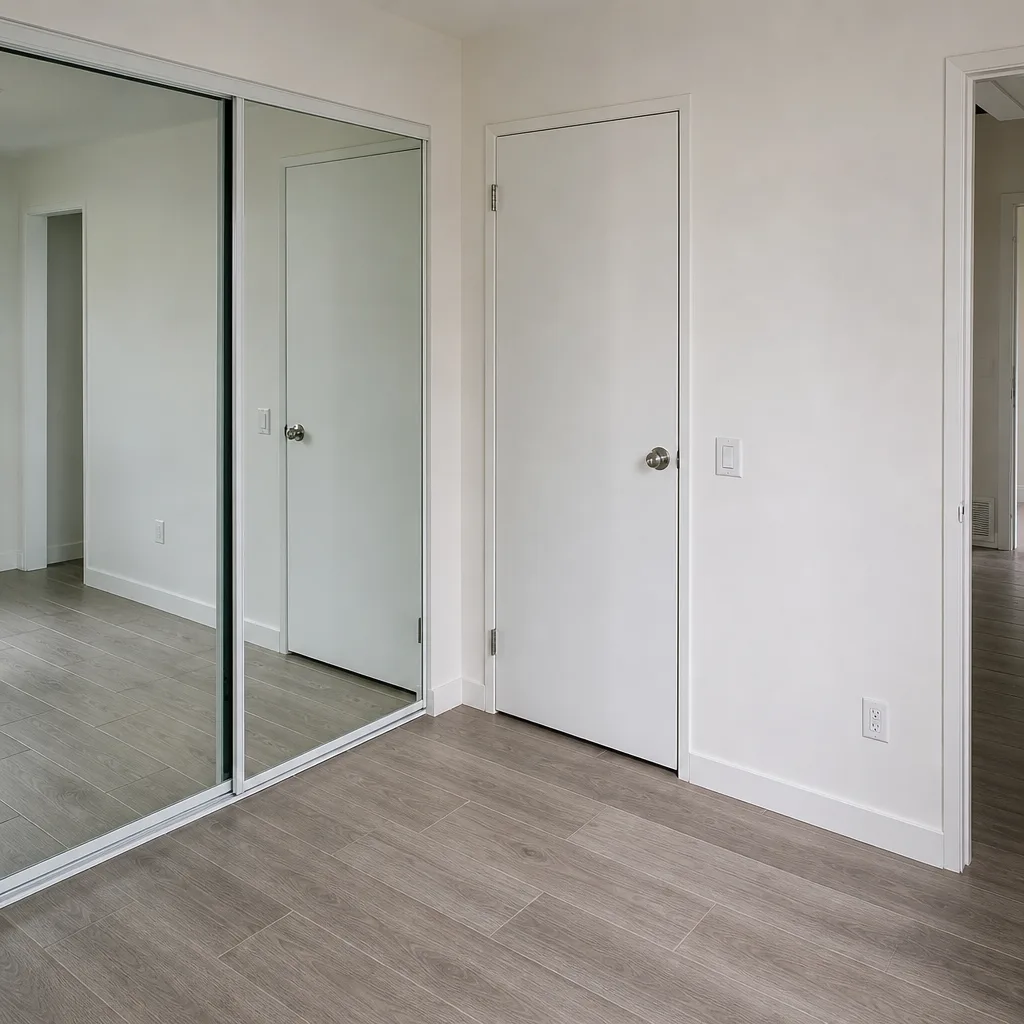 After
After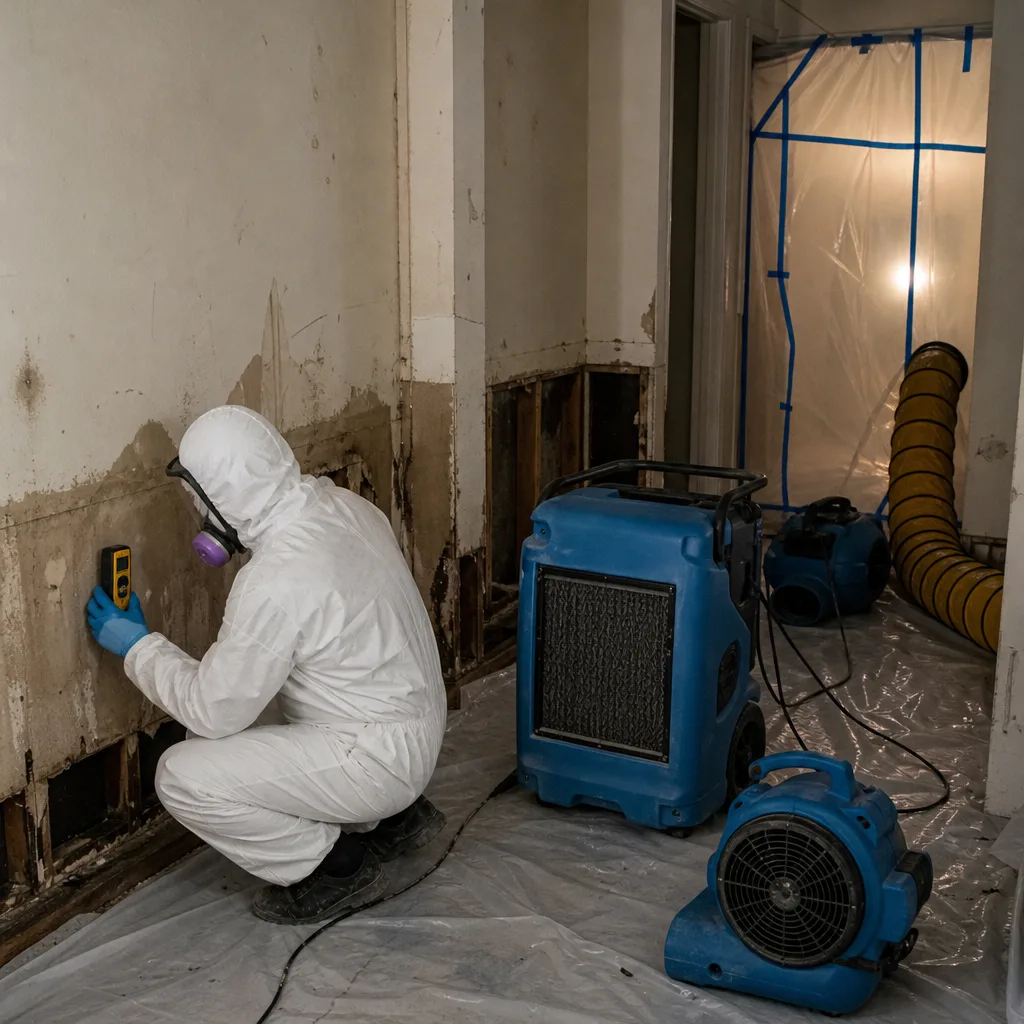 Before
 After
AfterWhen to Call a Professional
Call a professional restoration company the same day if water has touched drywall, carpet, cabinetry, or any porous material. Call immediately if the water source is a sewage line, toilet overflow, or any category 3 water. Call the same day for any fire damage beyond a small stovetop flareup, and for any visible mold growth larger than 10 square feet. Call before you cut into anything or discard anything. Keegan Restoration West Covina offers free estimates in West Covina, and a live person answers the phone 24 hours a day, 7 days a week. If you’re not sure whether your situation warrants professional help, call (559) 249-4798 and describe what you’re seeing. A technician will help you assess it over the phone, and if you don’t need us, we’ll tell you that too.
Frequently Asked Questions
You can dry surface water on hard flooring with a shop vac and fans, but you cannot structurally dry water that has entered drywall, carpet pad, or wall cavities without professional-grade LGR dehumidifiers and moisture measurement. In West Covina’s climate, DIY attempts at structural drying typically result in mold growth within 60 days.
Professional water damage restoration in West Covina typically costs $2,000 to $8,000 depending on the affected square footage, the water category, and whether wall cavities are involved. Minor events on hard surfaces run $1,200 to $2,500. Sewage backups and multi-room events run $5,000 to $12,000. Most insurance policies cover the majority of professional restoration costs after your deductible.
Your insurance company is still obligated to cover sudden and accidental water damage, but undocumented DIY attempts can reduce your payout. The adjuster may attribute secondary damage to your drying attempt rather than the original event. Professional restoration with full documentation actually strengthens your claim because it provides the scope and moisture evidence adjusters need to approve payment.
Yes. California Civil Code Section 1102 requires disclosure of known material facts, including prior water damage and mold. Professional restoration documentation satisfies this requirement and keeps the sale moving. Undocumented DIY attempts often trigger buyer inspection contingencies and price reductions when moisture or mold evidence surfaces.
Mold typically establishes within 48 to 72 hours of water exposure in West Covina’s climate, especially during summer months when indoor temperatures support rapid microbial growth. Professional drying should begin within 24 hours of the water event to prevent mold from establishing. If a musty odor is present, remediation is likely already needed.
Visible mold cleaning removes surface growth but leaves mold in wall cavities, under flooring, and in porous materials where roots have penetrated. Mold remediation is a containment and removal process following IICRC S520 standards, including HEPA air filtration, containment barriers, removal of contaminated porous materials, and post-remediation clearance testing. Cleaning visible mold without addressing the source typically results in recurrence.
The Bottom Line
Restoration is a documentation profession as much as a drying profession. The homeowner’s job is stopping the source, protecting property, and recording evidence. The professional’s job is structural drying to a written standard, with daily logs and a final report that satisfies your insurance adjuster and your future buyer’s inspector. In West Covina, where the dry climate masks trapped moisture and summer temperatures accelerate mold growth, the margins for error are thin. If water touched anything porous, call a professional today. If you’re not sure, call and describe the situation. A live person answers at (559) 249-4798, 24 hours a day, and the estimate is free. For more guides & resources on protecting your West Covina home, explore our blog. Getting the price in writing before work starts is how every job runs at Keegan Restoration West Covina, and it’s what you should demand from anyone who touches your home.
Written by Shane Pruitt, Owner at Keegan Restoration West Covina, serving West Covina since 2005.